
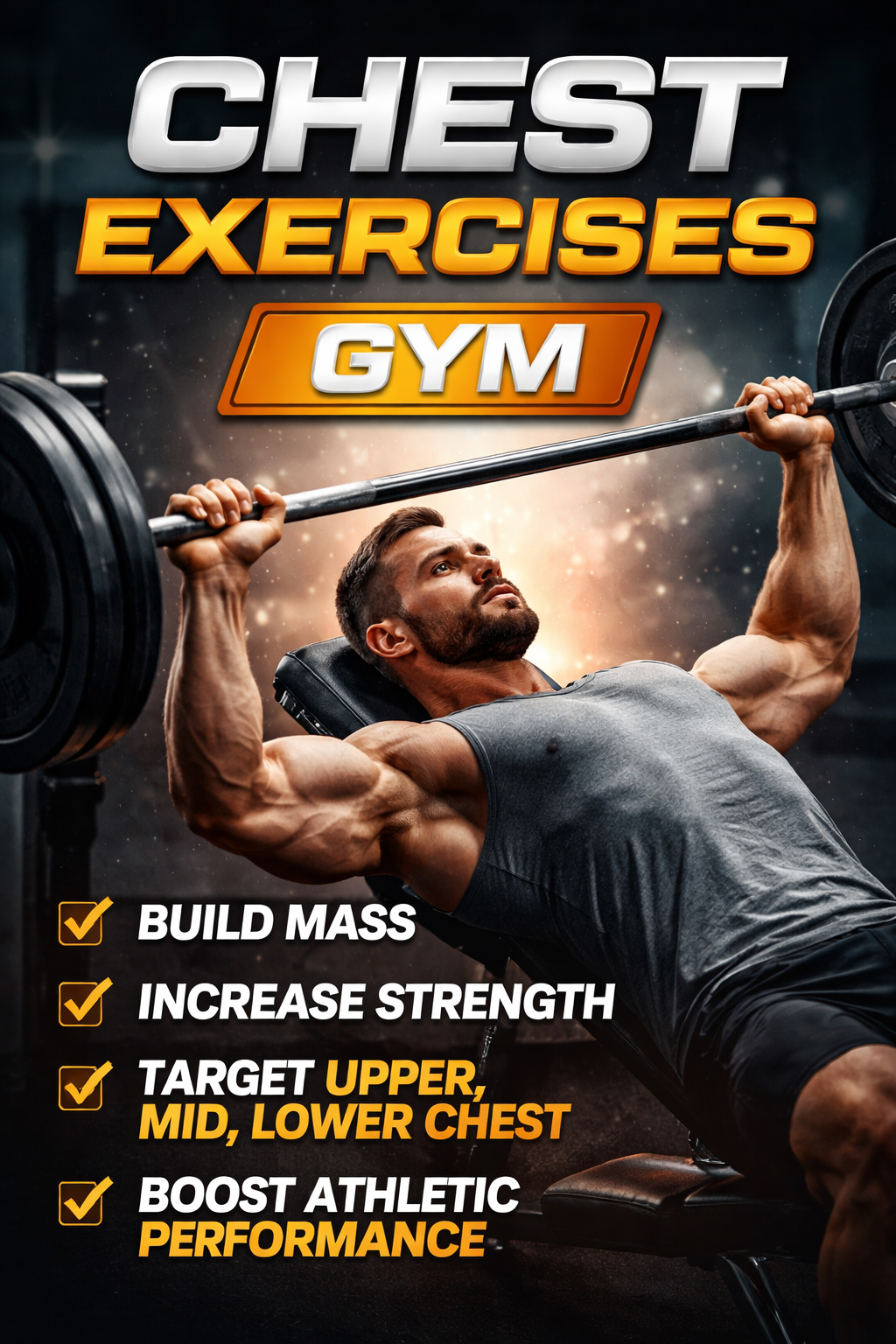
Introduction to Chest Exercises Gym
Chest exercises gym workouts are one of the most important components of any effective strength training or bodybuilding program. Whether your goal is to build a bigger chest, improve upper body strength, enhance posture, or achieve a balanced physique, training your chest properly in the gym is essential. The chest muscles play a major role in pushing movements, making them critical not only for aesthetics but also for functional strength and daily activities.
When people search for chest exercises in the gym, they are usually looking for proven movements such as the bench press, chest flys, cable crossovers, and chest press machines. These exercises primarily target the pectoralis muscles, which are among the largest muscle groups in the upper body. Because of their size, chest muscles respond extremely well to resistance training when trained with the right technique, volume, and progression.
One of the biggest advantages of performing chest exercises at the gym is access to specialized equipment. Barbells, dumbbells, cables, and machines allow you to train your chest from multiple angles. This is important because studies on muscle hypertrophy show that training a muscle through different angles and ranges of motion leads to better overall development and muscle activation.
Chest exercises gym routines are also popular because results are visible. A well-developed chest improves upper body proportions and enhances the appearance of the shoulders and arms. For men, chest workouts are often associated with building size and power. For women, gym chest exercises help improve posture, upper-body strength, and muscle tone without creating excessive bulk.
According to strength training research, compound chest exercises like the bench press can activate over 70% of the chest muscle fibers when performed correctly. This makes chest training one of the most efficient ways to build upper body mass and strength. However, poor form, incorrect exercise selection, or lack of recovery can slow progress or lead to injury.
In this comprehensive guide to chest exercises gym training, you will learn:
- How chest muscles work and why they matter
- The best chest exercises in the gym for beginners and advanced lifters
- How to target the upper, middle, and lower chest effectively
- Proper form, workout plans, nutrition, and recovery strategies
Chest Muscles Explained (Know What You’re Training)
Understanding chest muscles is the foundation of effective chest exercises gym workouts. Many people train chest without knowing which muscles they are actually targeting. This often leads to uneven development, slow progress, or shoulder pain. When you understand how the chest muscles work, you can choose better exercises, use correct angles, and activate more muscle fibers during every gym chest workout.
The chest is not just one single muscle. It is made up of multiple muscles that work together during pressing and pushing movements. Different chest exercises in the gym emphasize different parts of these muscles depending on body position, bench angle, and movement pattern.
Pectoralis Major
The pectoralis major is the largest and most visible chest muscle. It is the muscle responsible for the size, thickness, and shape of your chest. Almost all major chest exercises gym routines focus heavily on this muscle.
Key functions of the pectoralis major:
- Horizontal pushing (bench press movements)
- Bringing the arms across the body (fly movements)
- Assisting shoulder flexion and rotation
The pectoralis major has two main portions:
- Clavicular head (upper chest)
- Sternal head (middle and lower chest)
Different gym chest exercises emphasize each portion differently. For example:
- Incline bench press targets the upper chest
- Flat bench press emphasizes the middle chest
- Decline bench press focuses more on the lower chest
Fact: EMG studies show that incline pressing activates the upper chest up to 30% more than flat pressing when performed at a 30–45° angle.
Pectoralis Minor
The pectoralis minor is a smaller muscle located underneath the pectoralis major. While it does not add visible size to the chest, it plays a crucial role in shoulder health and stability during chest exercises gym workouts.
Functions of the pectoralis minor:
- Stabilizes the shoulder blade
- Assists in pushing and pressing movements
- Helps control shoulder positioning during chest training
When the pectoralis minor is tight or weak, it can lead to rounded shoulders and poor posture. This is why balanced chest training and proper stretching are important parts of any gym chest exercise routine.
How Chest Muscles Work During Gym Exercises
Most chest exercises in the gym involve pushing movements. These exercises fall into two main categories:
Compound Chest Exercises
Compound movements use multiple joints and muscle groups.
Examples include:
- Barbell bench press
- Dumbbell bench press
- Chest press machine
- Dips (chest-focused)
Benefits of compound chest exercises gym workouts:
- Lift heavier weights
- Build overall chest mass
- Improve strength faster
- Activate shoulders and triceps
Isolation Chest Exercises
Isolation movements focus more directly on the chest muscles.
Examples include:
- Dumbbell flys
- Cable crossovers
- Pec deck machine
Benefits of isolation chest exercises:
- Improve muscle definition
- Increase time under tension
- Help correct muscle imbalances
Chest Muscle Activation by Exercise Type
| Chest Exercise (Gym) | Upper Chest | Middle Chest | Lower Chest |
|---|---|---|---|
| Incline Bench Press | High | Medium | Low |
| Flat Bench Press | Medium | High | Medium |
| Decline Bench Press | Low | Medium | High |
| Cable Crossovers | Medium | High | Medium |
| Dumbbell Flys | Medium | High | Medium |
This table shows why combining different chest exercises gym routines leads to better overall development.
Why Muscle Knowledge Improves Chest Growth
When lifters focus only on lifting heavy weight without understanding muscle function, chest growth often stalls. By knowing:
- Which chest area each exercise targets
- How angles change muscle activation
- When to use compound vs isolation movements
you can design smarter gym chest workouts and see better results with less risk of injury.
Benefits of Doing Chest Exercises at the Gym
Training your chest in the gym offers far more than just visual muscle growth. Well-structured chest exercises gym routines improve strength, performance, posture, and overall upper-body balance. Because the chest muscles are involved in many pushing movements, consistent gym chest training delivers benefits that carry over into daily life and sports.
Below are the most important benefits of performing chest exercises in the gym, supported by training principles and research-backed facts.
Builds Upper Body Strength
One of the biggest benefits of chest exercises gym workouts is increased upper body strength. Compound movements like the bench press and chest press machine allow you to lift heavy weights safely in a controlled environment. These exercises strengthen not only the chest but also the shoulders, triceps, and core.
Strength benefits include:
- Improved pushing power
- Better performance in sports like football, boxing, and basketball
- Increased ability to handle heavier loads over time
Data Insight: Lifters who include heavy compound chest exercises gain strength up to 25–40% faster compared to those relying only on isolation movements.
Improves Posture and Shoulder Stability
Contrary to popular belief, properly programmed chest exercises at the gym can actually improve posture. When chest workouts are balanced with back training and proper form, they help stabilize the shoulder joints and support healthy movement patterns.
Postural benefits of gym chest exercises:
- Stronger chest supports upright posture
- Better shoulder blade control
- Reduced risk of shoulder discomfort
Proper chest training combined with stretching helps prevent tightness in the pectoralis minor, which is often responsible for rounded shoulders.
Enhances Athletic Performance
Athletes across many sports rely on strong chest muscles for explosive movements. Chest exercises gym training improves power output in actions like throwing, pushing, and blocking.
Sports that benefit from chest training:
- Martial arts and boxing
- Rugby and American football
- Swimming
- Track and field (throwing events)
Strong chest muscles improve force transfer from the upper body, making movements more efficient and powerful.
Boosts Chest Size and Definition
Aesthetic improvement is one of the most common reasons people focus on chest exercises gym routines. Gym-based training allows for progressive overload, which is essential for muscle growth.
Benefits for appearance include:
- Fuller chest shape
- Improved upper chest definition
- Better symmetry between chest, shoulders, and arms
Using a mix of barbells, dumbbells, and cables ensures the chest is trained through a full range of motion, maximizing muscle fiber recruitment.
Supports Arm and Shoulder Development
Chest exercises do not work the chest alone. Many gym chest exercises also involve the triceps and shoulders, making them efficient for overall upper-body development.
Secondary muscles activated during chest workouts:
- Triceps brachii
- Anterior deltoids
- Core stabilizers
This means chest day in the gym indirectly contributes to stronger and bigger arms and shoulders.
Mental and Hormonal Benefits
Heavy compound chest exercises gym workouts stimulate the release of anabolic hormones such as testosterone and growth hormone. While the hormonal effect is temporary, it contributes to muscle-building conditions in the body.
Additional benefits:
- Increased confidence
- Improved workout motivation
- Better mind-muscle connection
Why the Gym Is Ideal for Chest Training
Compared to home workouts, the gym offers:
- Adjustable resistance for progression
- Safer heavy lifting options
- Multiple angles for complete chest activation
- Machines that reduce injury risk for beginners
This makes chest exercises gym training suitable for beginners, intermediate lifters, and advanced athletes alike.
Best Chest Exercises in the
(Ranked by Effectiveness)
When it comes to building a strong, muscular chest, not all exercises are equal. The most effective chest exercises gym workouts are those that allow progressive overload, activate a high number of muscle fibers, and can be performed with proper form. Combining compound and isolation movements ensures maximum chest development and long-term progress.
Below are the best chest exercises in the gym, ranked based on muscle activation, strength potential, and overall effectiveness.
Barbell Bench Press
The barbell bench press is widely considered the most effective chest exercise in the gym. It allows you to lift heavy weights and overload the chest muscles more than almost any other movement.
Why it’s the king of chest exercises gym training:
- High activation of the pectoralis major
- Allows progressive overload
- Builds both size and strength
Muscles worked:
- Chest (primary)
- Triceps
- Front deltoids
Form tips:
- Keep feet flat on the floor
- Maintain a slight arch in the lower back
- Lower the bar to mid-chest level
Research Insight: EMG data shows the barbell bench press activates up to 70–75% of chest muscle fibers during maximal effort lifts.
Dumbbell Bench Press
The dumbbell bench press is one of the best chest exercises in the gym for improving muscle balance and range of motion. Unlike barbells, dumbbells force each side of the chest to work independently.
Benefits of dumbbell pressing:
- Greater stretch at the bottom
- Improved left-right muscle balance
- Reduced joint stress
Best for:
- Hypertrophy-focused chest workouts
- Lifters with strength imbalances
Incline Bench Press
The incline bench press is the most effective upper chest exercise gym movement. It targets the clavicular head of the pectoralis major, which many lifters struggle to develop.
Why incline pressing matters:
- Builds upper chest thickness
- Improves chest shape
- Enhances shoulder-to-chest transition
Best incline angle:
- 30–45 degrees for optimal upper chest activation
Decline Bench Press
The decline bench press emphasizes the lower portion of the chest. While not essential for everyone, it can help create a fuller chest appearance.
Benefits of decline chest exercises:
- Reduced shoulder strain
- Strong lower chest activation
- Allows heavier lifting for some lifters
This movement is especially useful for advanced lifters looking to refine chest shape.
Chest Fly Exercises (Dumbbell & Machine)
Chest flys are classic gym chest exercises designed to isolate the chest muscles and improve muscle definition.
Popular fly variations:
- Dumbbell flys
- Pec deck machine
- Cable flys
Key benefit:
- Increased time under tension
- Enhanced mind-muscle connection
Tip: Use lighter weights and controlled movement to avoid shoulder strain.
Push-Ups (Gym Variations)
Although push-ups are a bodyweight exercise, gym variations make them highly effective chest exercises gym workouts.
Advanced gym push-up variations:
- Weighted push-ups
- Incline push-ups
- Resistance band push-ups
Push-ups improve muscular endurance and reinforce proper pushing mechanics.
Cable Crossovers
Cable crossovers are one of the best gym chest exercises for shaping and definition. The constant tension from cables keeps the chest engaged throughout the entire movement.
Cable crossover angles:
- High to low (lower chest)
- Mid-level (middle chest)
- Low to high (upper chest)
Chest Press Machine
The chest press machine is ideal for beginners or those recovering from injury. It provides controlled resistance and minimizes balance demands.
Benefits of machine-based chest exercises gym training:
- Safer for beginners
- Easy to control tempo
- Allows focus on chest contraction
Comparison Table: Best Chest Exercises Gym
| Exercise | Strength | Muscle Growth | Beginner-Friendly |
|---|---|---|---|
| Barbell Bench Press | High | High | Medium |
| Dumbbell Bench Press | Medium | High | Medium |
| Incline Bench Press | Medium | High | Medium |
| Cable Crossovers | Low | High | High |
| Chest Press Machine | Medium | Medium | High |
Chest Exercises Gym by Chest Area
To build a well-developed chest, it is important to train all areas of the chest evenly. Many people focus only on flat bench pressing, which often leads to an underdeveloped upper chest or weak lower chest. A smart chest exercises gym routine targets the upper, middle, and lower chest using different angles and movements.
By understanding which gym chest exercises work each area, you can create balanced workouts and improve both strength and appearance.
Upper Chest Exercises Gym
The upper chest is one of the most difficult areas to develop. It requires pressing and fly movements performed at an incline. The upper chest is responsible for chest thickness near the collarbone and gives the chest a fuller, more complete look.
Best upper chest exercises in the gym:
- Incline barbell bench press
- Incline dumbbell bench press
- Incline dumbbell fly
- Low-to-high cable crossover
Why incline exercises work:
Incline angles shift more load to the clavicular head of the pectoralis major. Studies show that incline pressing increases upper chest activation by up to 30% compared to flat pressing.
Training tip:
Use a bench angle between 30–45 degrees. Steeper angles shift more work to the shoulders.
Middle Chest Exercises Gym
The middle chest is the largest part of the chest and contributes most to overall chest size. Most chest exercises gym workouts naturally target this area.
Best middle chest exercises:
- Flat barbell bench press
- Flat dumbbell bench press
- Pec deck machine
- Standard cable fly
Why middle chest training matters:
This area responds well to heavy compound movements and progressive overload. Flat pressing exercises are ideal for building mass and strength.
Key focus points:
- Full range of motion
- Controlled lowering phase
- Strong chest contraction at the top
Lower Chest Exercises Gym
Lower chest training improves the lower edge of the chest and enhances chest separation. Decline and downward pressing movements emphasize this area.
Best lower chest exercises in the gym:
- Decline bench press
- Chest-focused dips
- High-to-low cable crossover
Benefits of lower chest exercises:
- Adds fullness to the chest
- Improves overall chest symmetry
- Reduces over-reliance on shoulders
Safety tip:
When performing dips, lean slightly forward and keep elbows flared to emphasize chest activation instead of triceps.
Chest Area vs Exercise Comparison Table
| Chest Area | Best Gym Exercises |
|---|---|
| Upper Chest | Incline bench press, incline flys, low-to-high cable crossover |
| Middle Chest | Flat bench press, dumbbell press, pec deck |
| Lower Chest | Decline bench press, dips, high-to-low cable crossover |
How to Balance Chest Areas in Your Gym Workout
A balanced chest exercises gym plan should include:
- At least one incline movement
- One flat pressing exercise
- One isolation or cable movement
- Optional decline or dip exercise
This approach ensures complete chest activation and reduces muscle imbalances over time.
Chest Workout Plans for the Gym
A well-structured workout plan is essential for making progress with chest exercises gym training. Simply doing random chest exercises without a clear plan often leads to slow growth and plateaus. Below are structured chest workout plans for the gym, designed for beginners, intermediate lifters, and advanced trainees.
Each plan focuses on proper volume, intensity, and recovery to maximize chest development.
Beginner Chest Workout (Gym)
Beginners should focus on learning proper form and building a strength foundation. Machine-based and dumbbell movements are ideal at this stage.
Beginner Chest Gym Workout Plan:
- Chest Press Machine – 3 sets × 10–12 reps
- Dumbbell Bench Press – 3 sets × 8–10 reps
- Pec Deck Fly – 3 sets × 12–15 reps
- Push-Ups – 2 sets to failure
Key beginner tips:
- Train chest 1–2 times per week
- Focus on controlled movement
- Rest 60–90 seconds between sets
Fact: Beginners can gain noticeable strength within 4–6 weeks with consistent chest training.
Intermediate Chest Gym Workout
Intermediate lifters should start emphasizing progressive overload and variety. Both compound and isolation movements are included.
Intermediate Chest Exercises Gym Routine:
- Barbell Bench Press – 4 sets × 6–8 reps
- Incline Dumbbell Press – 3 sets × 8–10 reps
- Cable Crossovers – 3 sets × 12–15 reps
- Dips (Chest Focused) – 3 sets × 8–12 reps
Training focus:
- Increase weight gradually
- Improve mind-muscle connection
- Rest 90–120 seconds for heavy sets
Advanced Chest Exercises Gym Routine
Advanced trainees need higher intensity and advanced techniques to continue growing. Volume and load are carefully balanced.
Advanced Chest Gym Workout Plan:
- Incline Barbell Bench Press – 5 sets × 5–6 reps
- Flat Dumbbell Bench Press – 4 sets × 6–8 reps
- Cable Fly (Drop Sets) – 3 sets × 12–15 reps
- Decline Bench Press – 3 sets × 8–10 reps
Advanced techniques used:
- Drop sets
- Slow eccentric reps
- Short rest periods for hypertrophy
Quote: “Muscle growth happens when intensity meets consistency.” – Strength Training Principle
Weekly Chest Training Frequency
| Experience Level | Chest Days Per Week |
|---|---|
| Beginner | 1–2 |
| Intermediate | 2 |
| Advanced | 2–3 |
How to Progress Your Chest Exercises Gym Routine
To keep growing:
- Increase weights every 1–2 weeks
- Add reps before adding load
- Improve form before increasing volume
- Track workouts consistently
How Often Should You Train Chest at the Gym?
One of the most common questions about chest exercises gym training is how often chest should be trained for the best results. Training too little slows progress, while training too often can lead to fatigue, poor recovery, and stalled muscle growth. Finding the right balance is key.
The ideal chest training frequency depends on your experience level, workout intensity, and recovery ability.
Recommended Chest Training Frequency
Most research on muscle hypertrophy suggests that training a muscle group 2 times per week leads to better growth than once per week for most people. This applies strongly to gym chest exercises, especially compound movements.
General chest training guidelines:
- Beginners: 1–2 times per week
- Intermediate lifters: 2 times per week
- Advanced lifters: 2–3 times per week
Data Insight: Studies show that spreading weekly chest volume across multiple sessions improves muscle protein synthesis and recovery.
Why Recovery Matters for Chest Exercises Gym Workouts
Chest muscles require time to repair and grow after training. When you perform heavy chest exercises in the gym, tiny muscle fibers are damaged. These fibers grow back stronger during rest.
Typical chest recovery time:
- Light workouts: 24–36 hours
- Heavy workouts: 48–72 hours
Training chest again before full recovery can lead to:
- Decreased performance
- Increased injury risk
- Poor muscle growth
Signs You Are Training Chest Too Often
If your chest exercises gym routine is too frequent, your body will show warning signs.
Common overtraining symptoms:
- Persistent chest soreness
- Declining strength
- Shoulder pain
- Poor pump during workouts
- Fatigue or lack of motivation
When these signs appear, reducing chest volume or adding extra rest days is essential.
How to Split Chest Training Across the Week
Different training splits affect how often you train chest.
Popular chest training splits:
- Push/Pull/Legs: Chest trained 2x per week
- Upper/Lower Split: Chest trained 2x per week
- Body Part Split: Chest trained 1–2x per week
- Full Body Training: Chest trained 2–3x per week
Each split can work well if volume and recovery are managed correctly.
Weekly Chest Volume Guidelines
| Level | Weekly Sets for Chest |
|---|---|
| Beginner | 8–12 sets |
| Intermediate | 12–18 sets |
| Advanced | 16–24 sets |
Splitting these sets across multiple gym chest workouts improves performance and recovery.
Best Advice for Chest Training Frequency
The best chest exercises gym frequency is one you can maintain consistently without pain or burnout. Focus on:
- Quality over quantity
- Proper form
- Adequate sleep and nutrition
Proper Form Tips for Chest Exercises in the Gym
Proper form is crucial for safe and effective chest exercises gym workouts. Even small mistakes can reduce muscle activation, limit growth, or increase the risk of injury, especially to the shoulders and elbows. Mastering form ensures every rep targets the chest correctly while minimizing strain on other joints.
Below are essential tips for performing chest exercises safely and efficiently.
Common Mistakes Beginners Make
- Lifting too heavy: Using excessive weight often causes poor form and shoulder strain.
- Flaring elbows excessively: Can lead to shoulder injuries and reduce chest activation.
- Partial range of motion: Not lowering the weight fully reduces muscle engagement.
- Arching the lower back too much: Creates unnecessary stress on the spine.
- Neglecting warm-ups: Cold muscles are more prone to injury.
Tip: Start with lighter weights to focus on proper form before progressing.
Bench Press Safety Tips
- Keep your feet flat on the floor to stabilize your lower body.
- Maintain a slight arch in the lower back while keeping your glutes on the bench.
- Grip the bar slightly wider than shoulder-width.
- Lower the bar slowly to your mid-chest and press explosively upward.
- Always use a spotter when lifting heavy.
Breathing Techniques
Proper breathing improves performance and safety during chest exercises gym routines:
- Inhale while lowering the weight
- Exhale while pushing or pressing
- Avoid holding your breath for extended periods, which can spike blood pressure
Shoulder Positioning for Injury Prevention
- Retract your shoulder blades slightly during pressing exercises
- Keep shoulders down and back, not hunched forward
- Avoid excessive elbow flare, especially during fly movements
Correct shoulder positioning ensures the chest muscles do the majority of the work while protecting rotator cuff and shoulder joints.
Mind-Muscle Connection
Focusing on the chest muscles during each rep, known as the mind-muscle connection, can enhance growth. Tips include:
- Visualize the chest contracting
- Use slower, controlled movements
- Pause briefly at the peak contraction
Case Study: Research shows that lifters focusing on the mind-muscle connection during dumbbell flys had 15–20% higher chest activation than those lifting without focus.
Key Takeaways for Proper Form
- Use weight you can control safely
- Maintain shoulder stability
- Perform full range of motion
- Focus on contracting the chest, not just moving the weight
- Prioritize form over volume or load
Proper form is the foundation of chest exercises gym success, helping you build size, strength, and symmetry while minimizing injury risk.
Chest Exercises Gym for Different Goals
Not all chest exercises gym routines are designed for the same goal. Your approach should change depending on whether your focus is muscle growth (hypertrophy), strength, or fat loss. Adjusting weight, reps, rest, and exercise selection ensures you train your chest effectively for your specific objective.
Chest Exercises for Muscle Growth (Hypertrophy)
Muscle growth requires moderate to heavy weights with higher volume and controlled movements. Isolation exercises are often added to compound lifts to fully engage the chest.
Hypertrophy-focused chest exercises gym plan:
- Barbell Bench Press – 4 sets × 8–12 reps
- Incline Dumbbell Press – 3 sets × 10–12 reps
- Dumbbell Fly – 3 sets × 12–15 reps
- Cable Crossovers – 3 sets × 12–15 reps
Key hypertrophy tips:
- Use moderate weights you can control with proper form
- Focus on time under tension (slow lowering phase)
- Rest 60–90 seconds between sets
- Train chest 2–3 times per week for best results
Fact: Studies indicate that 8–12 rep ranges maximize muscle fiber recruitment and hypertrophy in the chest.
Chest Exercises for Strength
Strength-focused chest training uses heavier weights and lower reps, with longer rest periods. The goal is to increase maximal force output rather than purely muscle size.
Strength-focused gym chest workout:
- Barbell Bench Press – 5 sets × 3–5 reps
- Incline Bench Press – 4 sets × 4–6 reps
- Weighted Dips – 3 sets × 6–8 reps
- Chest Press Machine – 3 sets × 5–8 reps
Strength training tips:
- Use heavy weights with proper form
- Rest 2–3 minutes between heavy sets
- Focus on progressive overload
- Limit isolation exercises to reduce fatigue
Insight: Strength training improves neuromuscular efficiency, allowing the chest to generate more force per contraction.
Chest Exercises for Fat Loss
Chest training can also support fat loss when combined with higher-intensity circuits, supersets, and overall caloric management. While resistance training alone doesn’t burn as many calories as cardio, it preserves muscle mass during a fat-loss phase.
Fat-loss chest gym routine:
- Superset 1: Push-Ups + Cable Fly – 3 sets × 15 reps each
- Superset 2: Dumbbell Bench Press + Chest Press Machine – 3 sets × 12–15 reps each
- Finisher: Incline Dumbbell Fly – 2 sets × 15–20 reps
Fat-loss tips:
- Use short rest periods (30–60 seconds) for circuit-style workouts
- Combine chest workouts with cardio or full-body training
- Maintain high protein intake to prevent muscle loss
Case Study: High-volume chest circuits have been shown to maintain strength while increasing calorie burn and promoting lean mass retention during cutting phases.
Summary Table: Chest Goals and Training Focus
| Goal | Reps | Sets | Rest | Exercise Type |
|---|---|---|---|---|
| Muscle Growth | 8–12 | 3–4 | 60–90 sec | Compound + Isolation |
| Strength | 3–6 | 4–5 | 2–3 min | Heavy Compound |
| Fat Loss | 12–20 | 2–3 | 30–60 sec | Supersets / Circuit |
By aligning your chest exercises gym routine with your goal, you ensure faster progress, better results, and more efficient training.
Chest Exercises Gym for Men vs Women
While the principles of chest exercises gym training are similar for men and women, the approach often differs slightly due to goals, anatomy, and muscle size. Understanding these differences helps design effective workouts for both genders.
Chest Training for Men
Men typically focus on building size, strength, and upper body aesthetics. Male lifters often use heavier weights and prioritize compound movements for maximum chest activation.
Key points for men:
- Use progressive overload with barbell and dumbbell presses
- Include incline and decline movements to target all chest areas
- Add isolation exercises like flys or cable crossovers for definition
- Train 2–3 times per week depending on volume and recovery
Popular male-focused chest exercises:
- Barbell Bench Press (Flat, Incline, Decline)
- Dumbbell Press
- Cable Crossovers
- Weighted Dips
Tip: Men generally have more upper body strength, allowing heavier lifting for maximal hypertrophy.
Chest Training for Women
Women often aim for tone, strength, and posture improvements rather than bulk. Chest exercises help strengthen the pectorals, improve shoulder stability, and enhance upper body appearance.
Key points for women:
- Focus on moderate weights and higher reps (10–15) for toning
- Include incline and flat presses for balanced chest development
- Isolation exercises like flys and cable crossovers improve shape and definition
- Chest exercises can also enhance posture and reduce shoulder rounding
Popular female-friendly chest exercises:
- Dumbbell Bench Press (Flat or Incline)
- Chest Press Machine
- Push-Ups (Incline or Standard)
- Cable Crossovers
Myth Buster: Chest exercises do not make women bulky. Upper body muscle growth in women is limited by lower testosterone levels.
Common Benefits of Chest Exercises Gym for Both Genders
- Stronger upper body
- Improved posture and shoulder stability
- Better athletic performance
- Enhanced appearance and confidence
- Support for other pressing movements in the gym
Training Considerations
| Aspect | Men | Women |
|---|---|---|
| Goal | Muscle size, strength, aesthetics | Tone, posture, definition |
| Weight | Heavier | Moderate |
| Reps | 6–12 | 10–15 |
| Frequency | 2–3x/week | 1–2x/week |
| Equipment | Barbells, dumbbells, cables | Dumbbells, machines, cables |
By understanding the differences, both men and women can create chest exercises gym routines that maximize results while staying safe and effective.
Machines vs Free Weights for Chest Training
When designing a chest exercises gym routine, choosing between machines and free weights is an important decision. Both have unique advantages and can be combined for optimal results. Understanding when to use each ensures better chest development and reduces injury risk.
Free Weights for Chest Exercises Gym
Free weights include barbells and dumbbells. These exercises require stabilization and control, which engages more muscles, including the chest, shoulders, triceps, and core.
Benefits:
- Greater muscle activation: Stabilizing the weight recruits more muscle fibers.
- Variety of movement: Allows natural range of motion and angle adjustments.
- Progressive overload: Easy to increase weight over time.
Common free weight exercises for chest:
- Barbell Bench Press (Flat, Incline, Decline)
- Dumbbell Bench Press
- Dumbbell Flys
- Weighted Dips
Pro Tip: Free weights are ideal for building strength and size, but they require proper technique to prevent injury.
Machines for Chest Exercises Gym
Machines include chest press machines, pec deck, and cable machines. They guide movement along a fixed path, which can be safer and easier for beginners or for targeting specific parts of the chest.
Benefits:
- Safety: Reduces risk when lifting heavy alone.
- Isolation: Focuses on chest muscles without relying heavily on stabilizers.
- Controlled motion: Easier to maintain form for beginners or injury recovery.
Popular machine exercises:
- Chest Press Machine
- Pec Deck / Butterfly Machine
- Cable Crossovers
When to Use Machines vs Free Weights
| Goal | Best Option | Notes |
|---|---|---|
| Strength & Size | Free weights | Allows heavy lifts and natural range of motion |
| Isolation & Definition | Machines | Great for targeting specific chest fibers |
| Beginners | Machines | Safer and easier to learn proper form |
| Injury Recovery | Machines | Controlled movement reduces stress on joints |
Optimal Approach: Combine Both
For the best chest development:
- Start with free weight compound movements (bench press, dumbbell press) for strength and mass.
- Follow with machine or cable isolation exercises (pec deck, cable flys) to enhance shape and definition.
- Adjust based on experience, goals, and recovery capacity.
Key Insight: Using both free weights and machines in a chest exercises gym routine maximizes growth while minimizing risk.
Common Chest Training Mistakes to Avoid
Even the best chest exercises gym routines can fail if common mistakes are made. Avoiding these errors ensures safer workouts, better muscle activation, and faster progress. Here’s what to watch out for:
1. Using Too Much Weight
Many lifters focus on lifting heavy instead of controlling form. This reduces chest activation and increases shoulder and elbow strain.
Solution:
- Use a weight you can control for the full range of motion
- Prioritize form over load
- Gradually increase weight as strength improves
2. Ignoring Warm-Ups
Jumping straight into heavy pressing exercises can lead to injury, especially in the shoulders.
Solution:
- Perform 5–10 minutes of light cardio
- Include dynamic stretches and resistance band exercises for the chest and shoulders
3. Skipping Upper Chest Training
Many gym-goers only do flat bench presses, neglecting the upper chest. This leads to uneven development and a flat-looking chest.
Solution:
- Include incline presses or incline dumbbell flys in every routine
- Focus on full range of motion and contraction
4. Poor Range of Motion
Partial reps limit chest fiber recruitment and slow progress. Avoid bouncing the bar or stopping halfway through a press.
Solution:
- Lower the weight slowly to chest level
- Press fully but maintain tension
- Use controlled movements
5. Overtraining Chest
Too much volume or frequency can reduce performance, increase injury risk, and slow growth.
Solution:
- Follow recommended chest frequency (1–3 times per week depending on experience)
- Track volume and adjust based on recovery
- Prioritize rest days and nutrition
6. Neglecting Mind-Muscle Connection
Lifting without focus often engages the shoulders or triceps more than the chest.
Solution:
- Focus on chest contraction during each rep
- Slow down eccentric phase (lowering)
- Pause briefly at the top of each movement
Summary Table: Mistakes and Fixes
| Mistake | How to Fix |
|---|---|
| Lifting too heavy | Reduce weight, focus on control |
| Ignoring warm-up | Include light cardio + dynamic stretches |
| Skipping upper chest | Add incline presses/flys |
| Poor range of motion | Perform full reps slowly |
| Overtraining | Limit frequency, monitor recovery |
| Lack of mind-muscle connection | Focus on chest contraction |
By correcting these mistakes, your chest exercises gym routine will be safer, more effective, and yield faster results.
Warm-Up and Stretching for Chest Exercises Gym
Warming up and stretching are critical steps often overlooked in chest exercises gym routines. They prepare the muscles for heavy lifting, improve range of motion, enhance performance, and reduce the risk of injury. Both dynamic warm-ups and post-workout stretches should be part of every gym chest session.
Best Warm-Up Exercises Before Chest Day
A proper warm-up increases blood flow to the chest muscles and activates stabilizing muscles like the shoulders and triceps.
Dynamic Warm-Up Routine (5–10 minutes):
- Arm Circles – 10–15 forward and backward rotations
- Resistance Band Chest Press – 2 sets × 15 reps
- Push-Ups – 2 sets × 10–15 reps
- Dumbbell Light Bench Press – 2 sets × 12 reps (light weight)
Benefits of warming up:
- Reduces shoulder and chest injury risk
- Improves muscle activation
- Prepares joints for pressing movements
Tip: Avoid static stretching before heavy lifts, as it can reduce strength and power temporarily.
Post-Workout Chest Stretches
Stretching after chest training helps relieve tightness, improve flexibility, and speed recovery.
Effective Post-Workout Chest Stretches:
- Doorway Chest Stretch – Hold 20–30 seconds per side
- Pectoral Stretch on Stability Ball – 20–30 seconds
- Cross-Body Shoulder Stretch – 20 seconds per arm
- Chest Foam Roller Release – 1–2 minutes
Benefits of post-workout stretches:
- Reduces delayed onset muscle soreness (DOMS)
- Improves shoulder mobility
- Enhances posture and chest openness
Quick Warm-Up and Stretching Table
| Phase | Exercise | Reps / Duration | Purpose |
|---|---|---|---|
| Warm-Up | Arm Circles | 10–15 | Shoulder activation |
| Warm-Up | Resistance Band Press | 2 × 15 | Chest activation |
| Warm-Up | Push-Ups | 2 × 10–15 | Full chest engagement |
| Post-Workout | Doorway Stretch | 20–30 sec | Stretch pectorals |
| Post-Workout | Foam Roller | 1–2 min | Muscle relaxation |
Key Insight: Spending 10 minutes on warm-up and stretching can significantly improve performance and reduce injury risk during chest exercises gym workouts.
Nutrition Tips to Support Chest Muscle Growth
Proper nutrition is as important as training when it comes to chest exercises gym workouts. Muscles grow not just in the gym but during recovery, and nutrients fuel both workouts and recovery. Without the right diet, even the most effective chest routines will yield limited results.
Protein Intake for Chest Muscle Growth
Protein is the building block of muscle. Adequate protein ensures that your chest muscles repair and grow after heavy gym sessions.
Guidelines:
- 1.6–2.2 grams per kg of body weight daily for muscle growth
- Include high-quality protein sources:
- Chicken, turkey, and lean beef
- Eggs and dairy products
- Fish and seafood
- Plant-based options: lentils, beans, tofu
Tip: Spread protein intake evenly across meals to maximize muscle protein synthesis.
Pre-Workout Nutrition
Eating before a chest workout provides energy for performance and strength.
Pre-Workout Guidelines:
- Eat 1–2 hours before training
- Include carbs for energy and moderate protein
- Examples:
- Oatmeal with protein powder
- Banana with Greek yogurt
- Whole-grain toast with peanut butter
Benefit: Carbohydrates fuel explosive movements in chest exercises like bench presses and dips.
Post-Workout Nutrition
After training, your chest muscles need nutrients for recovery.
Post-Workout Guidelines:
- Eat within 30–60 minutes after training
- Combine protein and fast-digesting carbs
- Examples:
- Whey protein shake with a banana
- Chicken breast with rice and vegetables
- Greek yogurt with fruit
Research Insight: Post-workout nutrition accelerates glycogen replenishment and promotes muscle protein synthesis, helping your chest recover and grow faster.
Hydration and Supplements
Hydration: Drinking enough water is essential for performance, recovery, and muscle fullness. Aim for 2–3 liters per day, more on training days.
Supplements: While not mandatory, certain supplements can support chest muscle growth:
- Whey protein – convenient high-quality protein source
- Creatine monohydrate – improves strength and power
- Branched-chain amino acids (BCAAs) – may support recovery
Tip: Supplements should complement, not replace, a balanced diet.
Summary Table: Nutrition for Chest Growth
| Meal Timing | Focus | Examples |
|---|---|---|
| Pre-Workout | Energy + Protein | Oatmeal + Protein, Banana + Yogurt |
| Post-Workout | Recovery | Whey Protein Shake + Banana, Chicken + Rice |
| Daily | Muscle Repair | Lean meats, eggs, dairy, legumes |
| Hydration | Performance | 2–3 liters water daily |
| Optional Supplements | Strength & Recovery | Creatine, BCAAs, Whey Protein |
Chest Exercises Gym – Frequently Asked Questions (FAQs)
Here are the most common questions people have about chest exercises in the gym, along with clear, practical answers. This FAQ section helps clarify doubts and provides actionable tips for better results.
1. How long does it take to see results from chest exercises at the gym?
- Answer: Visible results can appear within 6–8 weeks for beginners, assuming proper training, nutrition, and recovery. For intermediate or advanced lifters, noticeable improvements may take slightly longer due to adaptation.
2. Can I build a bigger chest without heavy weights?
- Answer: Yes. While heavy weights maximize strength and hypertrophy, chest growth can also occur using bodyweight exercises, resistance bands, and moderate dumbbells combined with higher reps and time under tension.
3. How many reps and sets are ideal for chest exercises?
- Answer: Depends on your goal:
- Muscle growth: 3–4 sets × 8–12 reps
- Strength: 4–5 sets × 3–6 reps
- Fat loss/toning: 2–3 sets × 12–20 reps
4. Should I train chest every day?
- Answer: No. The chest muscles need 48–72 hours of recovery after a heavy workout. Overtraining can lead to injury, decreased performance, and slower muscle growth.
5. Are machines or free weights better for chest exercises?
- Answer: Both have benefits:
- Free weights: Best for strength and overall chest development
- Machines: Great for isolation, safety, and beginners
- Optimal approach: Combine both in your routine
6. Can women get bulky from chest exercises?
- Answer: No. Women typically have lower testosterone levels than men, which makes it very difficult to develop bulky chest muscles. Chest exercises for women primarily improve tone, strength, and posture.
7. What is the best way to target upper, middle, and lower chest?
- Answer: Use a combination of bench angles:
- Upper chest: Incline bench press, incline dumbbell flys
- Middle chest: Flat bench press, pec deck
- Lower chest: Decline bench press, dips, high-to-low cable crossover
8. How important is stretching for chest workouts?
- Answer: Very important. Proper warm-up and post-workout stretching:
- Prepares muscles for lifting
- Improves flexibility and range of motion
- Reduces the risk of injury
- Supports recovery
9. Can I train chest effectively at home without a gym?
- Answer: Yes, though options are limited:
- Push-ups (standard, incline, decline)
- Resistance band presses or flys
- Dumbbell chest presses and flys
- Home training can build tone and strength, but for maximum hypertrophy, gym equipment is more effective.
10. How do I avoid shoulder pain during chest exercises?
- Answer: Key tips:
- Keep elbows slightly tucked
- Retract shoulder blades during presses
- Avoid heavy weights with poor form
- Warm up properly before lifting
- Incorporate stretching and mobility work
Conclusion – Maximizing Your Chest Exercises Gym Routine
Training your chest effectively in the gym requires a combination of knowledge, planning, and consistency. By understanding the chest muscles, selecting the right exercises, using proper form, and supporting your workouts with nutrition and recovery, you can build a strong, well-shaped chest while minimizing injury risk.
Key Takeaways for Chest Exercises Gym Success
- Know Your Muscles: Understanding the upper, middle, and lower chest helps you target all areas for balanced development.
- Prioritize Compound Movements: Bench presses, dumbbell presses, and dips build size and strength efficiently.
- Include Isolation Exercises: Flys, cable crossovers, and pec deck exercises refine chest definition and shape.
- Follow Structured Workout Plans: Tailor your routine based on your experience level and goals (strength, hypertrophy, or fat loss).
- Maintain Proper Form: Safe lifting techniques reduce injury risk and improve chest activation.
- Use Machines and Free Weights Wisely: Combine both for maximum results.
- Support Workouts with Nutrition: Adequate protein, pre/post-workout meals, and hydration fuel growth and recovery.
- Allow Sufficient Recovery: Train chest 1–3 times per week depending on your level, and prioritize rest and sleep.
- Warm-Up and Stretch: Prepare the muscles before training and recover effectively afterward.
- Track Progress and Adjust: Monitor strength, volume, and performance, and adapt exercises as needed.
Final Thought
Whether your goal is building mass, increasing strength, or toning your chest, a smart, well-rounded chest exercises gym routine will deliver results. Consistency, attention to form, and proper recovery are just as important as lifting heavy weights. By combining science-backed strategies with dedication, you can develop a strong, sculpted chest that not only looks great but also enhances overall upper-body performance.
Pro Tip: Rotate exercises and vary angles every 6–8 weeks to prevent plateaus and continue making gains.