
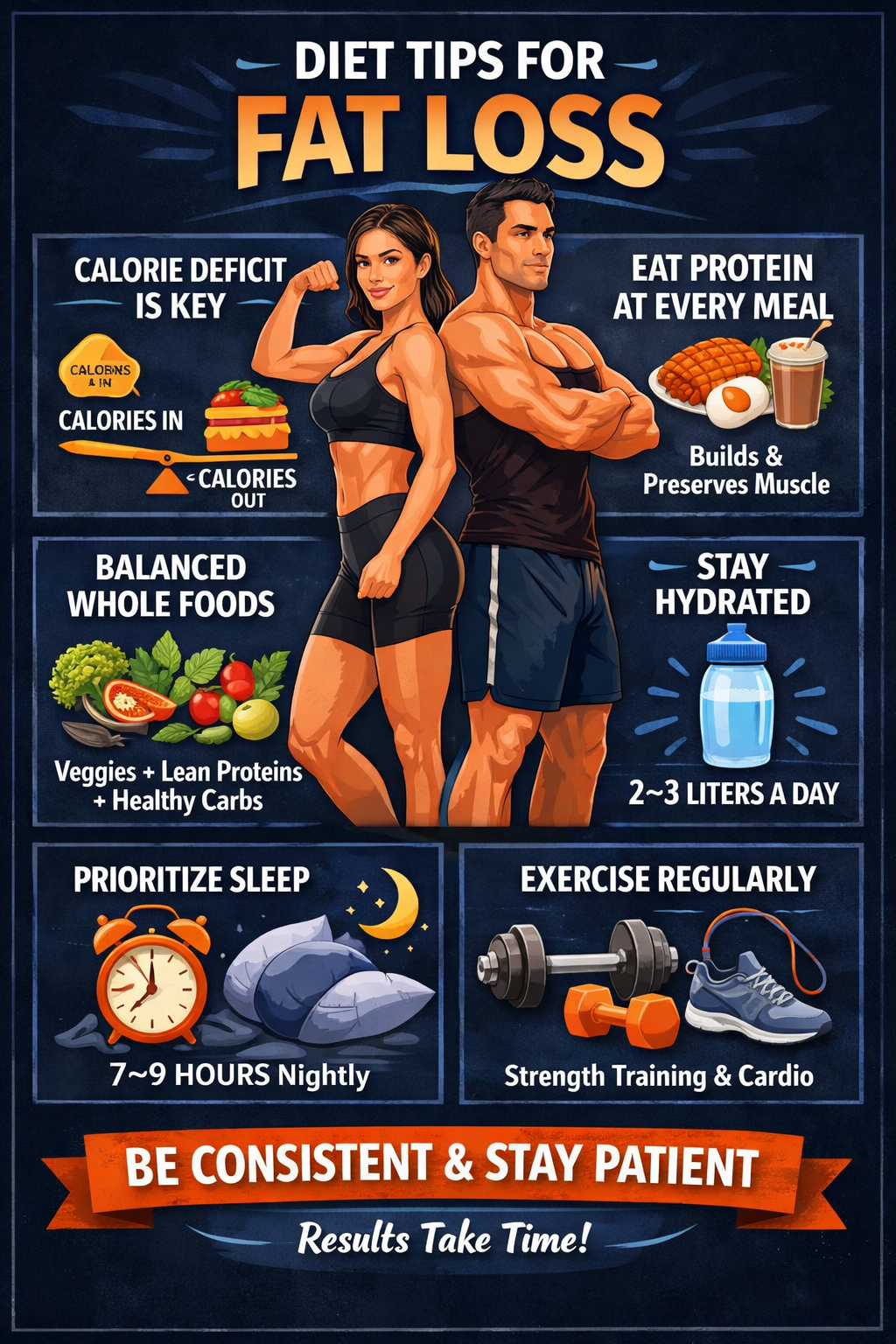
This guide focuses on diet tips for fat loss that are practical, science-backed, and easy to follow. You’ll learn what fat loss really means, how it works, and how to design a diet that helps you lose fat without starving, cutting entire food groups, or damaging your health.
What Is Fat Loss and How Is It Different From Weight Loss?
Many people use the terms fat loss and weight loss interchangeably.
However, understanding the difference is one of the most important diet tips for fat loss if your goal is long-term success.
Fat Loss vs Weight Loss (Simple Explanation)
- Weight loss refers to a drop in total body weight
This can include:- Body fat
- Muscle mass
- Water weight
- Glycogen (stored carbohydrates)
- Fat loss specifically means reducing body fat while:
- Preserving muscle
- Maintaining strength
- Improving overall body composition
It is possible to lose weight without losing fat, and it is also possible to lose fat without seeing major changes on the scale.
Why the Scale Can Be Misleading
The weighing scale only shows total body weight.
It does not tell you:
- How much fat you’ve lost
- How much muscle you’ve gained
- How much water your body is holding
For example:
- Reducing carbohydrates can cause quick water loss
- Strength training can increase muscle while fat decreases
In both cases, the scale may barely change, yet real fat loss is still happening.
Why Body Composition Matters More Than Weight
Body composition refers to the ratio of:
- Fat mass
- Lean mass (muscle, bones, organs)
A person with lower body fat and higher muscle mass will:
- Look leaner at the same weight
- Burn more calories at rest
- Have better metabolic health
This is why the best diet tips for fat loss focus on:
- Reducing body fat
- Protecting muscle
- Creating sustainable eating habits
Fat Loss vs Weight Loss Comparison
| Factor | Fat Loss | Weight Loss |
|---|---|---|
| Primary goal | Reduce body fat | Reduce scale weight |
| Muscle retention | High | Often low |
| Sustainability | Long-term | Short-term |
| Visual results | Lean and toned | Smaller but not defined |
| Health benefits | Strong | Limited |
Why Fat Loss Should Be the Real Goal
Scientific research shows that preserving muscle while losing fat leads to:
- Faster metabolism
- Better insulin sensitivity
- Lower risk of weight regain
- Improved long-term health
“The goal isn’t just to weigh less—it’s to be healthier, stronger, and leaner.”
This is why effective diet plans for fat loss prioritize:
- Nutrition quality
- Proper calorie intake
- Consistency over perfection
How Does Fat Loss Work in the Body?
To apply the best diet tips for fat loss, you must understand how fat loss actually happens inside the body. Once this is clear, dieting becomes logical instead of confusing.
Fat loss is not about special foods or secret tricks.
It is a biological process driven by energy balance, hormones, and metabolism.
What Is a Calorie Deficit? (The Foundation of Fat Loss)
A calorie deficit happens when you consume fewer calories than your body uses in a day.
- Calories in = food and drinks
- Calories out = metabolism, daily movement, exercise
Fat loss only occurs when calories out are greater than calories in.
This is the single most important rule behind all successful diet plans for fat loss.
Example:
- Your body needs 2,200 calories to maintain weight
- You eat 1,800 calories per day
- You are in a 400-calorie deficit
- Over time, your body uses stored fat for energy
How the Body Burns Fat
When you stay in a calorie deficit:
- The body looks for energy
- Glycogen (stored carbs) is used first
- Once glycogen is low, stored body fat is broken down
- Fat is converted into usable energy
This process is called lipolysis.
Fat loss is not instant. It is gradual and depends on consistency, not perfection.
Role of Metabolism in Fat Loss
Your metabolism is the total number of calories your body burns daily. It includes:
- Basal Metabolic Rate (BMR) – calories burned at rest
- Thermic Effect of Food (TEF) – calories burned digesting food
- Activity – movement, walking, workouts
Important Fact:
- Muscle burns more calories than fat at rest
- Losing muscle slows metabolism
- Preserving muscle improves long-term fat loss
This is why smart diet tips for fat loss always include:
- Enough protein
- Avoiding extreme calorie cuts
Hormones That Affect Fat Loss
Hormones play a major role in how easily your body loses fat.
Key hormones include:
- Insulin – controls blood sugar and fat storage
- Leptin – signals fullness and energy balance
- Ghrelin – controls hunger
- Cortisol – stress hormone linked to fat storage
Poor diet habits can:
- Increase hunger hormones
- Reduce satiety hormones
- Make fat loss harder
Balanced eating, sleep, and stress control help regulate these hormones naturally.
Common Fat Loss Myths (That Slow Progress)
Many people fail because they believe myths instead of science.
Myth 1: You must eat very little to lose fat
Truth: Extreme restriction slows metabolism
Myth 2: Carbs stop fat loss
Truth: Calorie balance matters more than carbs
Myth 3: Fat-burning foods melt fat
Truth: No food burns fat without a calorie deficit
Myth 4: Skipping meals speeds fat loss
Truth: It often increases overeating later
Key Takeaways From How Fat Loss Works
- Fat loss requires a calorie deficit
- Metabolism and muscle mass matter
- Hormones influence hunger and fat storage
- Consistency beats extreme dieting
Understanding this makes all other diet tips for fat loss easier to follow and apply.
How Many Calories Should You Eat for Fat Loss?
One of the most common questions people ask when searching for diet tips for fat loss is:
“How many calories should I eat to lose fat?”
There is no one-size-fits-all number.
However, there is a simple and proven method to find the right calorie intake for fat loss.
Understanding Maintenance Calories
Maintenance calories are the number of calories your body needs to:
- Maintain current weight
- Support daily activity
- Fuel basic body functions
If you eat:
- Above maintenance → weight gain
- At maintenance → weight stays the same
- Below maintenance → fat loss
Fat loss only happens below maintenance.
How to Calculate Calories for Fat Loss
A simple and practical formula:
- Bodyweight (kg) × 22–24 = estimated maintenance calories
- Reduce 300–500 calories for fat loss
Example:
- Weight: 70 kg
- Maintenance ≈ 1,540–1,680 calories
- Fat loss calories ≈ 1,200–1,400 per day
This creates a safe calorie deficit that supports steady fat loss without muscle loss.
Safe Calorie Deficit for Sustainable Fat Loss
The best diet tips for fat loss focus on sustainability, not speed.
Recommended deficit:
- 300–500 calories per day
- Results in ~0.5 kg fat loss per week
Why not cut more?
- Extreme deficits increase muscle loss
- Hunger hormones rise
- Energy and performance drop
- Fat loss slows over time
Why Eating Too Few Calories Slows Fat Loss
Many people think eating less = faster fat loss.
This is one of the biggest diet mistakes.
When calories drop too low:
- Metabolism adapts downward
- Muscle breakdown increases
- Hormones become unbalanced
- Fat loss plateaus
Eating too little doesn’t speed fat loss — it trains your body to survive on less.
Signs Your Calories Are Too Low
- Constant fatigue
- Poor sleep
- Hair thinning
- Low motivation
- Intense cravings
If you experience these, your fat loss diet needs adjustment.
Calorie Ranges for Fat Loss (General Guide)
| Person Type | Calories for Fat Loss |
|---|---|
| Small female | 1,200–1,400 |
| Average female | 1,400–1,700 |
| Small male | 1,600–1,900 |
| Average male | 1,800–2,300 |
These are estimates. Tracking progress matters more than exact numbers.
Key Takeaways for Calories and Fat Loss
- Find maintenance calories first
- Create a moderate deficit
- Avoid extreme calorie cuts
- Adjust based on progress
Mastering calorie intake is one of the most powerful diet tips for fat loss you can apply.
Best Diet Tips for Fat Loss (Core Principles)
If you ignore trends and focus only on what actually works, fat loss becomes much simpler.
These core diet tips for fat loss apply to every successful fat loss plan, regardless of food preferences or diet style.
Master these principles first, and everything else becomes easier.
Focus on Whole, Nutrient-Dense Foods
Whole foods are minimally processed and naturally filling.
They provide:
- Fewer calories per bite
- More vitamins and minerals
- Better appetite control
Examples of whole foods for fat loss:
- Lean meats, fish, eggs
- Fruits and vegetables
- Whole grains
- Legumes and nuts
Ultra-processed foods are easy to overeat and slow fat loss.
Eat Enough Protein to Lose Fat, Not Muscle
Protein is the most important nutrient for fat loss.
Benefits of protein for fat loss:
- Preserves lean muscle mass
- Boosts metabolism (high thermic effect)
- Reduces hunger and cravings
Recommended protein intake:
- 1.6–2.2 grams per kg of body weight
| Bodyweight | Protein Needed |
|---|---|
| 60 kg | 95–130 g |
| 70 kg | 110–155 g |
| 80 kg | 125–175 g |
Higher protein intake is one of the most effective diet tips for fat loss.
Control Portions Without Starving
Portion control does not mean eating tiny meals.
It means eating the right amount for your goals.
Helpful portion strategies:
- Use smaller plates
- Fill half your plate with vegetables
- Prioritize protein first
- Eat slowly and mindfully
This helps reduce calories without feeling deprived.
Consistency Beats Perfection
Fat loss is not ruined by one meal.
It is built by habits repeated daily.
- 80% consistency > 100% perfection
- One bad day does not cancel progress
- Long-term adherence matters most
The best diet is the one you can stick to.
Why Crash Diets Always Fail
Crash diets promise fast results but cause long-term damage.
Problems with crash dieting:
- Muscle loss
- Slowed metabolism
- Hormonal imbalance
- Weight regain
Short-term fat loss often turns into long-term weight gain.
Core Diet Tips for Fat Loss (Quick Summary)
- Eat mostly whole foods
- Prioritize protein at every meal
- Control portions sustainably
- Stay consistent
- Avoid extreme restrictions
These fundamentals create a strong base for long-term fat loss success.
Best Macronutrient Breakdown for Fat Loss
Once calories are controlled, the next important step in applying diet tips for fat loss is understanding macronutrients.
Macronutrients determine how your body feels, performs, and preserves muscle during fat loss.
The three main macronutrients are:
- Protein
- Carbohydrates
- Fats
Protein Intake for Fat Loss
Protein should be the priority in any fat loss diet.
Why protein matters:
- Preserves muscle during calorie deficit
- Increases fullness and reduces hunger
- Burns more calories during digestion
Recommended protein intake:
- 1.6–2.2 g per kg of bodyweight
High-protein foods for fat loss:
- Chicken breast
- Fish
- Eggs
- Greek yogurt
- Lentils and beans
Higher protein intake is one of the most proven diet tips for fat loss.
Healthy Fats and Their Role in Fat Loss
Dietary fat does not make you fat.
Excess calories do.
Benefits of healthy fats:
- Support hormone production
- Improve nutrient absorption
- Increase satiety
Healthy fat sources:
- Olive oil
- Avocados
- Nuts and seeds
- Fatty fish
Fat intake guideline:
- 20–30% of total daily calories
Carbohydrates for Fat Loss: Friend or Enemy?
Carbs are often blamed for fat gain.
In reality, carbs can support fat loss when eaten correctly.
Benefits of carbs during fat loss:
- Fuel workouts
- Support thyroid function
- Improve adherence
Best carb sources for fat loss:
- Oats
- Rice
- Potatoes
- Fruits
- Vegetables
Low-Carb vs Low-Fat Diets for Fat Loss
Both approaches can work.
| Diet Type | Pros | Cons |
|---|---|---|
| Low-carb | Reduces appetite | Hard to sustain |
| Low-fat | Flexible food choices | Hunger for some |
Fat loss success depends more on calories and consistency than carb or fat intake.
Sample Macronutrient Split for Fat Loss
| Macronutrient | Percentage |
|---|---|
| Protein | 30–40% |
| Carbs | 30–45% |
| Fats | 20–30% |
This balanced split supports fat loss while maintaining energy and muscle.
Key Takeaways on Macros and Fat Loss
- Protein is non-negotiable
- Fats support hormones
- Carbs are not the enemy
- Choose a macro split you can sustain
Best Foods to Eat for Fat Loss
Food quality plays a huge role in how easy or difficult fat loss feels.
The best diet tips for fat loss focus on foods that keep you full, energized, and satisfied while staying within your calorie target.
Choosing the right foods makes fat loss sustainable instead of stressful.
High-Protein Foods for Fat Loss
Protein-rich foods help preserve muscle and control hunger.
Best high-protein foods:
- Chicken breast
- Turkey
- Fish (salmon, tuna, cod)
- Eggs and egg whites
- Greek yogurt
- Cottage cheese
- Lentils and chickpeas
High-protein foods are essential in any fat loss diet.
Fiber-Rich Foods That Keep You Full
Fiber slows digestion and improves fullness.
High-fiber foods for fat loss:
- Vegetables (broccoli, spinach, carrots)
- Fruits (apples, berries, pears)
- Whole grains (oats, brown rice)
- Legumes
Recommended fiber intake:
- 25–35 grams per day
Best Vegetables for Fat Loss
Vegetables are low in calories and high in volume.
Top vegetables for fat loss:
- Leafy greens
- Cucumbers
- Bell peppers
- Zucchini
- Cauliflower
These allow you to eat larger portions without excess calories.
Fruits You Can Eat While Losing Fat
Fruits are healthy and can fit into a fat loss diet.
Best fruit choices:
- Berries
- Apples
- Oranges
- Kiwi
Avoid excessive fruit juice, which lacks fiber.
Healthy Snacks for Fat Loss
Smart snacking prevents overeating later.
Fat loss-friendly snacks:
- Greek yogurt with berries
- Boiled eggs
- Nuts (small portions)
- Protein shakes
- Hummus with vegetables
Best Foods for Fat Loss (Quick Table)
| Food Type | Benefits |
|---|---|
| Protein foods | Preserve muscle |
| Vegetables | Low calorie, high volume |
| Fiber foods | Reduce hunger |
| Healthy fats | Improve satiety |
Key Takeaways on Foods for Fat Loss
- Prioritize protein and fiber
- Eat plenty of vegetables
- Choose whole, minimally processed foods
- Control portions, not food groups
Foods to Limit or Avoid for Fat Loss
While fat loss doesn’t mean eliminating all your favorite foods, certain items can slow progress or make it harder to stick to your diet.
Knowing what to limit is one of the most practical diet tips for fat loss.
Ultra-Processed Foods and Hidden Calories
Highly processed foods are easy to overeat and often contain hidden sugars, fats, and calories.
Examples:
- Fast food
- Packaged snacks (chips, cookies)
- Sugary cereals
- Ready-made meals
These foods may taste good but often add calories without providing fullness or nutrients.
Sugar and Fat Loss – What You Need to Know
Sugar is a major contributor to excess calories.
Consuming too much sugar can:
- Increase cravings
- Spike blood sugar
- Slow fat loss progress
Tips:
- Avoid sugary drinks (soda, fruit juices)
- Limit candies and desserts
- Focus on natural sugar from fruits
Liquid Calories That Slow Fat Loss
Drinks can sabotage fat loss because liquid calories don’t trigger fullness like solid foods.
Examples:
- Soda and sweetened beverages
- Alcoholic drinks
- Milkshakes or flavored coffees
Tip: Stick to water, herbal tea, or black coffee to stay hydrated without adding excess calories.
Is Junk Food Allowed During Fat Loss?
Yes, occasionally.
The key is moderation:
- 80/20 rule: 80% healthy foods, 20% flexibility
- Portion control is critical
- Avoid binge eating during cheat meals
The best diet tips for fat loss encourage flexibility to improve adherence long-term.
Foods to Limit Summary Table
| Food Type | Reason to Limit | Alternatives |
|---|---|---|
| Sugary drinks | High in empty calories | Water, tea, black coffee |
| Packaged snacks | Overeating risk | Nuts, fruit, yogurt |
| Junk food | Poor nutrient density | Homemade meals |
| Alcohol | Adds calories, slows metabolism | Occasional moderation |
Key Takeaways on Limiting Foods
- Focus on nutrient-dense whole foods
- Avoid hidden calorie traps
- Allow occasional treats to stay consistent
- Remember: moderation > elimination
Meal Timing and Frequency for Fat Loss
How often and when you eat can influence fat loss, hunger, and energy levels.
While calories and food quality are most important, meal timing can make fat loss easier to manage.
How Many Meals Per Day for Fat Loss?
There is no perfect number of meals. Fat loss depends on total calories, not meal frequency.
Common approaches:
- 3 meals per day – traditional and easy to follow
- 4–5 smaller meals – can help reduce hunger
- Intermittent fasting (1–2 meals in a shorter window) – may help some people manage calories
Choose a meal frequency that fits your lifestyle and keeps you consistent.
Does Intermittent Fasting Help Fat Loss?
Intermittent fasting (IF) is a pattern of eating where you restrict your eating window (e.g., 16:8 or 14:10).
Potential benefits for fat loss:
- Simplifies calorie control
- Can improve insulin sensitivity
- May reduce snacking and overeating
Important note:
- IF is not magical. Fat loss still requires a calorie deficit.
- Some people feel fatigued or binge during eating windows, which can backfire.
Late-Night Eating and Fat Loss
Eating late at night does not inherently cause fat gain.
What matters is total calories consumed vs calories burned.
Tips:
- Avoid mindless snacking late at night
- Focus on balanced meals earlier in the day
- Include protein and fiber to stay full
Timing is secondary. Adherence to your overall plan is key.
Pre- and Post-Workout Meals for Fat Loss
Eating around workouts can improve energy and preserve muscle.
Before workout:
- Small meal with protein + carbs 1–2 hours before
- Examples: banana + Greek yogurt, oats + whey
After workout:
- Protein to support recovery
- Moderate carbs to refill energy stores
- Examples: chicken + rice, protein shake + fruit
Proper timing helps performance, recovery, and muscle preservation during fat loss.
Key Takeaways on Meal Timing
- Total calories matter more than timing
- Choose meal frequency that fits your lifestyle
- Intermittent fasting works if sustainable
- Include protein around workouts
- Avoid excessive late-night snacking
Sample Diet Plan for Fat Loss
A practical diet plan helps you apply the best diet tips for fat loss without overthinking every meal.
Below is a sample plan based on balanced macronutrients, whole foods, and calorie control.
Sample 7-Day Fat Loss Diet Plan
Day 1:
- Breakfast: Oats with berries and whey protein
- Snack: Greek yogurt with almonds
- Lunch: Grilled chicken, quinoa, steamed broccoli
- Snack: Carrot sticks with hummus
- Dinner: Baked salmon, roasted vegetables, small sweet potato
Day 2:
- Breakfast: Scrambled eggs with spinach and whole-grain toast
- Snack: Apple with peanut butter (1 tbsp)
- Lunch: Turkey breast salad with mixed greens and olive oil
- Snack: Cottage cheese with cucumber slices
- Dinner: Stir-fried tofu with brown rice and vegetables
Day 3:
- Breakfast: Protein smoothie (whey, banana, spinach, almond milk)
- Snack: Boiled eggs (2)
- Lunch: Grilled lean beef, roasted cauliflower, quinoa
- Snack: Mixed berries
- Dinner: Baked cod with asparagus and small portion of mashed potato
Day 4:
- Repeat or swap meals to maintain variety
Day 5–7:
- Use similar structure, adjusting protein sources, vegetables, and complex carbs
The key is portion control, protein in every meal, and plenty of vegetables.
Vegetarian and Vegan Options
- Protein: Lentils, chickpeas, tofu, tempeh, edamame
- Carbs: Brown rice, oats, quinoa, sweet potato
- Fats: Nuts, seeds, avocado, olive oil
- Vegetables: Leafy greens, broccoli, peppers, zucchini
Fat Loss Diet Plan for Busy People
- Meal prep: Cook protein and carbs in bulk
- Grab-and-go snacks: Greek yogurt, boiled eggs, nuts, protein bars
- Quick meals: Stir-fries, salads, wraps with lean protein
Planning ahead reduces reliance on fast food and keeps you on track with diet tips for fat loss.
Key Takeaways for a Sample Diet Plan
- Eat protein at every meal
- Include vegetables and fiber
- Control portion sizes
- Use meal prep to save time
- Allow flexibility for social meals
Common Diet Mistakes That Stop Fat Loss
Even with the best intentions, small mistakes in your diet can halt fat loss progress.
Knowing these pitfalls helps you stay consistent and avoid frustration.
Eating Too Little and Slowing Metabolism
Many people think less food = faster fat loss.
Extreme calorie restriction can:
- Lower metabolism
- Cause muscle loss
- Increase hunger and cravings
- Lead to fat regain once normal eating resumes
One of the most overlooked diet tips for fat loss is eating enough to fuel your body while still maintaining a deficit.
Not Tracking Calories Correctly
Even healthy foods can add up.
Without tracking:
- Portion sizes may be underestimated
- Hidden calories from sauces, oils, and snacks can sabotage fat loss
Tip: Track food for a week to understand your actual intake.
Overestimating Calories Burned
Exercise is helpful but not a free pass to eat more.
People often overestimate calories burned through workouts.
- Example: 30-minute run ≈ 300 calories
- Eating a large snack afterward may exceed the deficit
Rule: Focus on calories in vs calories out, not just exercise.
Emotional Eating and Fat Loss
Stress, boredom, or emotions often lead to unplanned eating.
- Mindless snacking can add hundreds of calories
- Skipping meals often backfires with overeating later
Tip: Plan snacks, practice mindful eating, and address emotional triggers.
Lack of Patience and Consistency
Fat loss takes time.
Expecting overnight results leads to:
- Frustration
- Abandoning the plan
- Trying extreme diets
Reality: 0.5–1 kg fat loss per week is healthy, sustainable, and maintainable.
Summary Table of Common Mistakes
| Mistake | Effect on Fat Loss | How to Fix |
|---|---|---|
| Eating too little | Slowed metabolism | Moderate deficit |
| Not tracking food | Hidden calories | Track portions |
| Overestimating exercise | Eating too much | Stick to planned calories |
| Emotional eating | Extra calories | Plan meals & snacks |
| Impatience | Inconsistent adherence | Focus on long-term progress |
Key Takeaways on Common Mistakes
- Avoid extreme restriction
- Track intake for awareness
- Don’t rely solely on exercise
- Manage stress and emotional eating
- Be patient—consistency wins
How Hydration Affects Fat Loss
Water is often overlooked, but staying properly hydrated is one of the simplest and most effective diet tips for fat loss.
Hydration affects metabolism, appetite, exercise performance, and fat loss results.
How Much Water Should You Drink for Fat Loss?
A general guideline:
- 30–35 ml of water per kg of body weight per day
Examples:
- 60 kg → ~1.8–2.1 liters
- 70 kg → ~2.1–2.5 liters
- 80 kg → ~2.4–2.8 liters
Drinking water before meals can also help reduce calorie intake by increasing fullness.
Water vs Sugary Drinks
Sugary beverages are a common source of hidden calories:
- Soda, energy drinks, sweetened tea/coffee
- Alcoholic drinks
Replacing these with water:
- Reduces calorie intake
- Helps control hunger
- Improves fat loss outcomes
Tip: Sparkling water or herbal tea can add variety without extra calories.
Can Drinking Water Boost Fat Loss?
Studies show that drinking water can:
- Slightly increase metabolism (thermogenesis)
- Reduce appetite when consumed before meals
- Improve workout performance
Example:
Drinking 500 ml of water can temporarily boost calorie burn by 24–30 calories in the next 1–1.5 hours.
Key Takeaways on Hydration
- Drink enough water based on your body weight
- Avoid sugary drinks and excess alcohol
- Hydration supports metabolism, appetite control, and energy
- Drinking water before meals can help reduce calorie intake naturally
Supplements and Fat Loss Diets
While supplements are not required for fat loss, some can support your diet and enhance results when combined with proper nutrition and exercise.
They should complement, not replace, whole foods.
Protein Supplements
Whey, casein, or plant-based protein powders are convenient ways to meet daily protein goals.
Benefits:
- Preserves muscle during a calorie deficit
- Reduces hunger
- Supports recovery after workouts
One of the easiest diet tips for fat loss is ensuring enough protein per day, and supplements make this simple.
Fat Loss Supplements (Optional)
Some supplements may slightly enhance fat loss:
| Supplement | How It Helps | Notes |
|---|---|---|
| Caffeine | Boosts energy and metabolism | Avoid late-day doses |
| Green tea extract | Contains antioxidants that may support fat metabolism | Modest effect |
| Conjugated linoleic acid (CLA) | May reduce fat mass | Evidence is mixed |
| L-carnitine | Supports fat metabolism | Minimal effect in healthy adults |
Supplements alone won’t cause fat loss. They only work alongside a calorie deficit and healthy diet.
Micronutrients for Fat Loss
Adequate vitamins and minerals are critical:
- Magnesium → supports energy and metabolism
- Vitamin D → aids hormone balance
- B-vitamins → support energy production
Deficiency in these can slow metabolism and reduce fat loss efficiency.
Key Takeaways on Supplements
- Focus on whole foods first
- Use protein supplements if daily intake is insufficient
- Optional fat loss supplements provide small boosts, not miracles
- Micronutrients support overall health and metabolism
continue
Lifestyle Factors That Enhance Fat Loss
Diet alone is important, but lifestyle habits play a huge role in determining how quickly and effectively you lose fat.
Even the best diet tips for fat loss will be less effective without attention to lifestyle.
Sleep and Fat Loss
Sleep is critical for hormones that regulate appetite and fat storage.
Effects of poor sleep:
- Increased ghrelin (hunger hormone)
- Decreased leptin (satiety hormone)
- Higher cravings for high-calorie foods
- Slower recovery from workouts
Tip: Aim for 7–9 hours of quality sleep per night to support fat loss.
Stress Management
Chronic stress increases cortisol, which can:
- Promote fat storage, especially around the belly
- Increase cravings for sugary or fatty foods
- Reduce motivation to exercise
Stress management strategies:
- Meditation or deep breathing
- Yoga or light stretching
- Daily walks or nature exposure
- Journaling or hobbies
Exercise and Fat Loss
Exercise is not required for fat loss, but it supports muscle preservation, metabolism, and overall health.
- Strength training: Maintains muscle and boosts metabolism
- Cardio: Burns calories and improves cardiovascular health
- High-Intensity Interval Training (HIIT): Efficient fat-burning workouts
Combining diet with consistent exercise accelerates fat loss and improves body composition.
Consistency and Patience
Fat loss is a marathon, not a sprint.
Key lifestyle principles:
- Stick to your calorie deficit consistently
- Track progress with measurements, not just the scale
- Celebrate small wins
- Avoid extreme diets that cannot be sustained
Long-term adherence is the #1 factor separating those who keep fat off from those who regain it.
Key Lifestyle Takeaways
- Prioritize 7–9 hours of sleep
- Manage stress to regulate hunger and fat storage
- Include strength training and cardio
- Stay consistent and patient for sustainable results
Tracking Progress for Fat Loss
Monitoring your progress is crucial to ensure your fat loss diet is effective and to make necessary adjustments.
Without tracking, it’s easy to overestimate results or lose motivation.
Best Ways to Track Fat Loss
- Body Measurements
- Measure waist, hips, chest, arms, and thighs weekly
- Fat loss often shows in measurements before the scale moves
- Progress Photos
- Take photos every 2–4 weeks
- Compare to see visible changes in muscle definition and fat reduction
- Body Fat Percentage
- Methods: calipers, smart scales, or professional testing
- More accurate than weight alone for tracking fat loss
- Strength and Fitness Improvements
- Track lifts, reps, or workout performance
- Preserving or increasing strength indicates muscle retention during fat loss
- Weight Tracking
- Useful but not the only measure
- Focus on trends over weeks, not day-to-day fluctuations
Adjusting Your Diet Based on Progress
- If fat loss stalls for 2–4 weeks:
- Reduce calories slightly (~100–200 calories/day)
- Increase activity or adjust macronutrient balance
- If losing too fast (muscle loss risk):
- Increase calories slightly
- Ensure sufficient protein and strength training
Tracking allows for data-driven adjustments, making your fat loss plan more effective and sustainable.
Key Takeaways on Tracking
- Use multiple methods: measurements, photos, performance, and scale
- Look at long-term trends, not daily fluctuations
- Adjust calories or activity only when progress stalls
- Tracking helps maintain motivation and accountability
FAQs About Diet Tips for Fat Loss
Here are the most common questions people have when trying to lose fat, answered clearly and simply. These help reinforce the key principles and address common concerns.
1. Can I lose fat without exercising?
Yes. Fat loss is primarily driven by a calorie deficit, so you can lose fat through diet alone.
However, exercise preserves muscle, improves metabolism, and makes your results look better. Combining diet with strength training is ideal.
2. How fast should I lose fat?
A safe and sustainable rate is 0.5–1 kg (1–2 lbs) per week.
Faster fat loss increases the risk of muscle loss, nutrient deficiencies, and rebound weight gain.
3. Do I need to cut carbs completely to lose fat?
No. Carbs are not the enemy.
Focus on moderate, high-quality carbs (oats, rice, potatoes, fruits, and vegetables) while maintaining a calorie deficit.
4. Can I eat at night and still lose fat?
Yes. Fat loss depends on total calories and quality of food, not timing.
Avoid mindless snacking late at night, but having a small balanced meal is fine.
5. Are fat burners necessary for fat loss?
No. Fat burners are optional and provide only minor benefits.
The most effective fat loss strategy remains calorie deficit + whole foods + exercise.
6. How important is protein for fat loss?
Protein is critical. It preserves muscle, reduces hunger, and supports metabolism.
Aim for 1.6–2.2 grams per kg of body weight daily.
7. What if my fat loss plateaus?
Fat loss plateaus are normal. Solutions include:
- Reassessing calorie intake
- Increasing activity slightly
- Adjusting macronutrients
- Ensuring sleep and stress management
Tracking and consistency help overcome plateaus effectively.
8. Can I lose fat while still eating my favorite foods?
Yes, through moderation and portion control.
Following the 80/20 rule (80% healthy foods, 20% flexibility) keeps fat loss sustainable without feeling deprived.
9. How do I maintain fat loss long-term?
- Continue healthy eating habits
- Avoid extreme diets
- Strength train regularly
- Monitor your progress periodically
- Adjust calories as needed
10. What are the biggest mistakes people make when trying to lose fat?
- Eating too few calories
- Ignoring protein intake
- Overestimating exercise
- Following fad diets
- Impatience or inconsistency
Avoiding these mistakes ensures sustainable, long-term fat loss.
Conclusion: Key Takeaways for Diet Tips for Fat Loss
Losing fat doesn’t have to be complicated. The most effective strategies are simple, consistent, and backed by science. By understanding the process, following a structured diet, and applying the right lifestyle habits, fat loss becomes manageable and sustainable.
Core Principles to Remember
- Calorie Deficit is Key
- Fat loss only happens when you burn more calories than you consume.
- Avoid extreme calorie restriction; moderate deficits work best.
- Prioritize Protein and Whole Foods
- Protein preserves muscle and reduces hunger.
- Whole, nutrient-dense foods keep you full and provide essential nutrients.
- Balance Your Macros
- Include adequate protein, moderate carbs, and healthy fats.
- Choose a macronutrient split you can maintain long-term.
- Track Progress and Adjust
- Monitor weight, measurements, and strength.
- Make small adjustments if fat loss stalls.
- Lifestyle Matters
- Sleep 7–9 hours per night
- Manage stress to control hunger hormones
- Stay consistent with exercise and healthy habits
- Consistency Over Perfection
- Long-term adherence beats extreme diets or quick fixes.
- Allow flexibility and occasional treats to stay motivated.
Final Thoughts
Fat loss is a gradual process, not an overnight transformation. By combining smart diet choices, proper portion control, hydration, exercise, and lifestyle habits, you can achieve lasting results.
Remember: knowledge + consistency = sustainable fat loss. Focus on building habits that you can maintain, and fat loss will naturally follow.
Implement these diet tips for fat loss today, and over time, you’ll see lasting results without feeling deprived or overwhelmed.