
Introduction
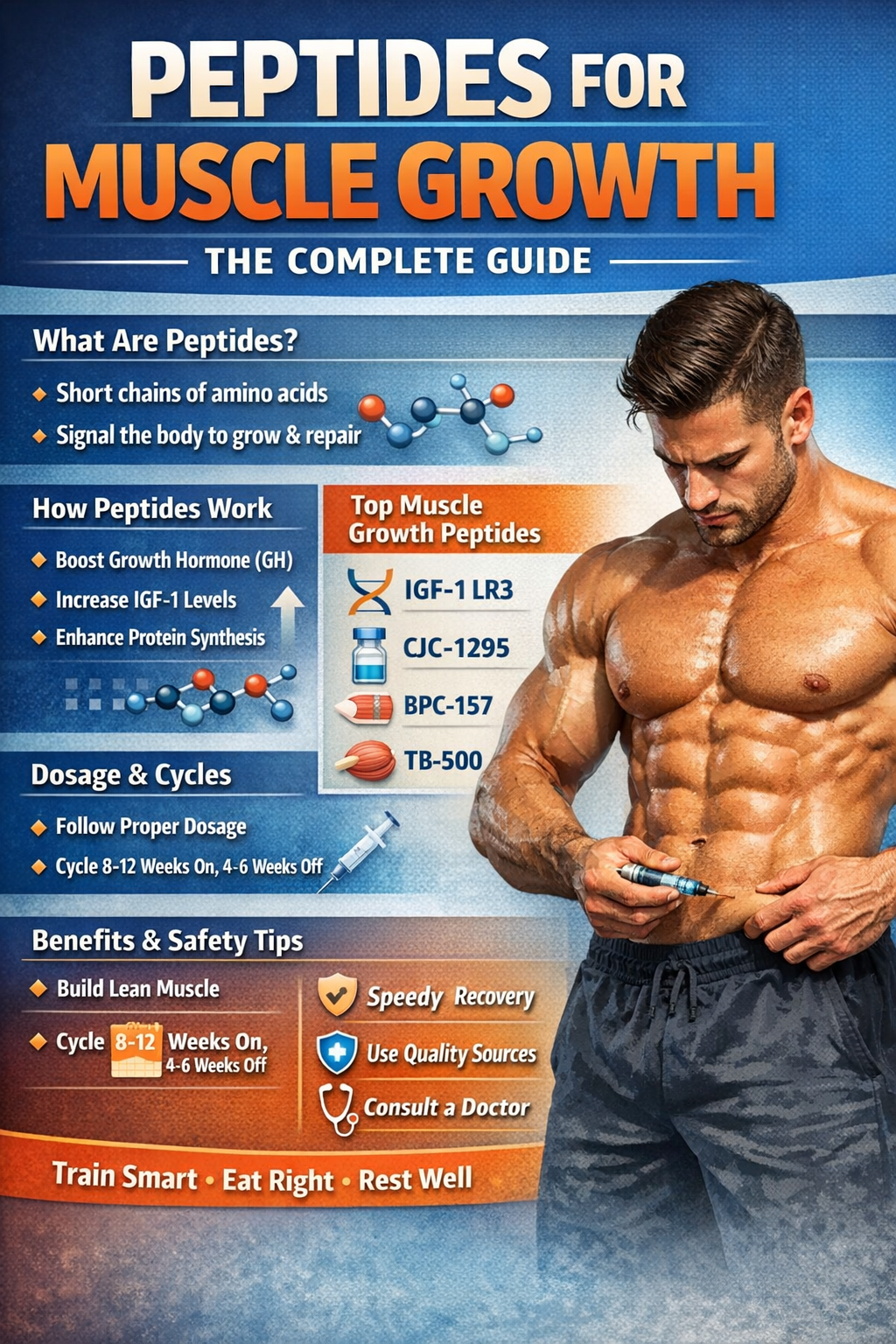
Peptides for muscle growth have become increasingly popular in the fitness and bodybuilding world. These small chains of amino acids work as powerful signaling molecules in the body, stimulating processes that can enhance muscle repair, recovery, and growth. Unlike traditional protein supplements or anabolic steroids, peptides target the hormonal and cellular pathways that directly influence muscle development, making them an attractive option for athletes, bodybuilders, and fitness enthusiasts looking for safe and effective muscle-building solutions.
What Are Peptides?
Peptides are short chains of amino acids, typically consisting of 2 to 50 amino acids, which are the building blocks of proteins. While proteins perform structural and functional roles in the body, peptides act as messengers and regulators, sending signals between cells to trigger specific biological processes. This signaling role makes them highly effective in influencing growth, repair, and metabolic functions, including muscle growth.
Understanding Peptides
At a molecular level, peptides are smaller than proteins, which allows them to be absorbed more easily and target specific cells or tissues. In the context of muscle development, certain peptides can stimulate the release of growth hormone (GH), increase protein synthesis in muscle cells, and accelerate recovery after workouts. Essentially, peptides help your body maximize its natural muscle-building potential without introducing artificial hormones in large doses.
Types of Peptides
There are two main types of peptides relevant to muscle growth:
- Endogenous Peptides – These are naturally produced by the body. Examples include growth hormone-releasing peptides (GHRPs) and insulin-like growth factor-1 (IGF-1). They regulate normal muscle growth, repair, and recovery.
- Synthetic Peptides – Lab-made versions designed to enhance specific effects. Common synthetic peptides for muscle growth include CJC-1295, BPC-157, and TB-500. These are often used in controlled doses to target muscle repair, strength, and endurance.
Some peptides are also classified based on their function in the body:
- Growth Hormone Secretagogues (GHSs): Stimulate natural GH release.
- Repair Peptides: Support muscle and tendon healing.
- Performance Peptides: Enhance strength, endurance, or recovery speed.
Fun Fact: The term “peptide” comes from the Greek word “peptos”, meaning “digested” or “cooked,” because peptides are derived from the breakdown of proteins.
By understanding these basic types and mechanisms, it becomes clear why peptides for muscle growth have gained traction among athletes and fitness enthusiasts—they provide a targeted approach to enhancing performance and building lean muscle efficiently.
How Peptides Work for Muscle Growth
Peptides for muscle growth work by activating specific pathways in the body that regulate muscle repair, protein synthesis, and hormone release. Unlike protein supplements, which provide raw materials for muscle tissue, peptides act as biological signals, instructing your body to increase muscle-building processes at the cellular level.
Mechanism of Action
The primary mechanism behind muscle-building peptides involves growth hormone (GH) stimulation. Many peptides, such as GHRP-6 or CJC-1295, bind to receptors in the pituitary gland, signaling it to release growth hormone into the bloodstream. Elevated GH levels then trigger:
- Increased IGF-1 Production: Growth hormone stimulates the liver to produce insulin-like growth factor-1 (IGF-1), which promotes muscle hypertrophy by increasing protein synthesis.
- Enhanced Nitrogen Retention: Amino acids are retained more efficiently in muscles, preventing breakdown and supporting repair.
- Fat Metabolism: Some peptides encourage lipolysis (fat breakdown), helping improve muscle definition while building lean mass.
In addition to these hormonal effects, repair peptides like BPC-157 and TB-500 work directly at the tissue level, accelerating muscle recovery, tendon repair, and injury healing, allowing for more frequent and intense workouts.
Benefits of Using Peptides for Muscle Building
Using peptides for muscle growth can offer a range of benefits, including:
- Faster Muscle Recovery: Reduced soreness and quicker repair between training sessions.
- Increased Lean Muscle Mass: Targeted growth without excessive fat gain.
- Improved Strength and Endurance: Enables more intense and longer workouts.
- Enhanced Body Composition: Some peptides promote fat loss while preserving or building muscle.
- Reduced Risk of Overtraining Injuries: Repair peptides help prevent strain and tendon injuries during high-intensity workouts.
Case Study:
A study published in the Journal of Clinical Endocrinology & Metabolism found that participants using GHRP-2 combined with resistance training showed a significant increase in lean muscle mass and strength over 12 weeks compared to the control group. This demonstrates the potential of muscle growth peptides to complement traditional training programs effectively.
Scientific Evidence and Research
While anecdotal reports often drive popularity, there is increasing scientific evidence supporting peptides’ role in muscle growth:
| Peptide | Mechanism | Observed Benefit | Reference |
|---|---|---|---|
| GHRP-6 | GH secretagogue | Increased lean mass, fat reduction | J Clin Endocrinol Metab, 2015 |
| CJC-1295 | GH releasing hormone analog | Enhanced protein synthesis, recovery | Growth Horm IGF Res, 2014 |
| IGF-1 LR3 | Growth factor analog | Muscle hypertrophy, repair | Endocrinology, 2013 |
| BPC-157 | Tissue repair peptide | Faster healing of muscles & tendons | World J Gastroenterol, 2010 |
Note: While these studies are promising, many peptides are still under clinical research for muscle growth, and effects can vary based on dosage, cycle length, and individual physiology.
By understanding the mechanisms and benefits, it’s clear why peptides for muscle growth are gaining popularity—they target both the hormonal and cellular pathways that traditional supplements often cannot.
Best Peptides for Muscle Growth
With the growing popularity of peptides in the fitness world, several types have emerged as highly effective for building lean muscle, enhancing recovery, and improving overall performance. Choosing the right peptide depends on your goals, whether it’s muscle hypertrophy, strength, or recovery.
Popular Peptides and Their Functions
Here’s a breakdown of the most widely used peptides for muscle growth and their specific roles:
- IGF-1 (Insulin-like Growth Factor-1)
- Function: Promotes muscle hypertrophy and tissue repair by stimulating protein synthesis.
- Benefits: Increased muscle size, improved recovery, and enhanced strength gains.
- Notes: Most effective when combined with a structured training program.
- GHRP-6 and GHRP-2 (Growth Hormone-Releasing Peptides)
- Function: Stimulate natural growth hormone release from the pituitary gland.
- Benefits: Fat loss, lean muscle gain, and improved endurance.
- Notes: GHRP-6 can increase appetite; GHRP-2 is preferred for fat reduction.
- CJC-1295 (Growth Hormone-Releasing Hormone Analog)
- Function: Increases GH production for longer periods compared to GHRPs alone.
- Benefits: Enhanced protein synthesis, faster recovery, and lean muscle growth.
- Notes: Often combined with GHRP-6 for synergistic effects.
- BPC-157 (Body Protective Compound-157)
- Function: Supports healing and repair of muscles, tendons, and ligaments.
- Benefits: Accelerated recovery from injuries, reduced joint pain, and enhanced tissue repair.
- Notes: Not primarily for hypertrophy but valuable for training consistency.
- TB-500 (Thymosin Beta-4)
- Function: Promotes tissue regeneration and flexibility.
- Benefits: Helps prevent injuries and speeds up recovery in high-intensity training.
- Notes: Works well with BPC-157 for optimal repair and recovery.
How to Choose the Right Peptide
When selecting peptides for muscle growth, consider these factors:
- Training Goals:
- Want to build size → IGF-1 or CJC-1295 + GHRP combo.
- Focused on recovery → BPC-157 or TB-500.
- Safety Profile:
- Some peptides may cause minor side effects like water retention or joint stiffness.
- Always start with a low dose and monitor your body’s response.
- Cost and Availability:
- Peptides vary in price depending on purity, brand, and form (injectable vs. oral).
- Prioritize high-quality, verified suppliers to avoid counterfeit products.
- Combination Strategies:
- Many athletes combine peptides (e.g., GHRP-6 + CJC-1295) to maximize growth hormone output while minimizing side effects.
Table: Popular Muscle Growth Peptides and Key Benefits
| Peptide | Main Function | Key Benefit | Typical Use |
|---|---|---|---|
| IGF-1 LR3 | Muscle hypertrophy | Increased lean muscle | Post-workout or cyclic |
| GHRP-6 | GH stimulation | Muscle gain + fat loss | Daily, multiple doses |
| CJC-1295 | GH analog | Sustained GH release | Weekly injections |
| BPC-157 | Tissue repair | Faster recovery | Injury support |
| TB-500 | Tissue regeneration | Flexibility + healing | Injury prevention |
Tip: While peptides can enhance muscle growth, they are most effective when combined with proper nutrition, progressive resistance training, and adequate rest. They are not a replacement for hard work in the gym.
Dosage, Cycle, and Administration
Understanding the correct dosage and cycle is essential when using peptides for muscle growth. Proper use maximizes benefits while minimizing side effects and ensures your body responds optimally to these compounds.
Recommended Dosages for Muscle Growth
Peptide dosages vary depending on the type, goals, and individual response. Here’s a general overview based on research and common practices in the bodybuilding community:
- IGF-1 LR3: 20–50 mcg per day, usually post-workout to enhance muscle repair and growth.
- GHRP-6: 100–300 mcg, 2–3 times daily, ideally before meals or training sessions to stimulate GH release.
- CJC-1295: 1–2 mg weekly, often combined with GHRP-6 for synergistic effects.
- BPC-157: 200–500 mcg per day, depending on injury severity and location.
- TB-500: 2–5 mg weekly, typically in divided doses for tissue regeneration.
Important: Dosages should be adjusted according to body weight, health status, and training intensity. Consulting a healthcare professional before starting any peptide regimen is strongly recommended.
Peptide Cycling
A peptide cycle refers to using peptides for a set period followed by a break. Cycling helps prevent the body from adapting too quickly and reduces the risk of side effects.
- Beginner Cycle: 4–6 weeks on, followed by 2–4 weeks off.
- Intermediate/Advanced Cycle: 8–12 weeks on, followed by 4–6 weeks off.
- Purpose: Allows the body to reset GH and IGF-1 levels and maintain effectiveness.
Cycling also minimizes potential issues such as water retention, joint discomfort, and hormone imbalance.
Administration Methods
Peptides are available in various forms, each with pros and cons:
- Injectable Peptides
- Most common and effective for GH-stimulating peptides.
- Administered subcutaneously (under the skin) or intramuscularly.
- Requires proper hygiene, dosing precision, and sterile equipment.
- Oral or Sublingual Peptides
- Easier to use but less effective for GH-related peptides due to breakdown in the digestive system.
- Often used for repair peptides like BPC-157.
Tips for Safe Administration:
- Rotate injection sites to prevent tissue damage.
- Use proper sterilization techniques to avoid infections.
- Store peptides in a cool, dark place and follow manufacturer instructions for reconstitution.
Summary
- Start with lower doses and gradually increase based on results and tolerance.
- Follow a structured cycle to maintain effectiveness.
- Choose the administration method that aligns with your goals and lifestyle.
- Always combine peptide use with proper training, nutrition, and rest for optimal muscle growth.
Risks, Side Effects, and Safety
While peptides for muscle growth can offer impressive results, they are not without risks. Understanding potential side effects, safety precautions, and responsible usage is essential to maximize benefits while protecting your health.
Potential Side Effects
Peptides are generally considered safer than anabolic steroids, but they can still cause mild to moderate side effects, including:
- Water Retention and Bloating: Some growth hormone-stimulating peptides like GHRP-6 may cause temporary water retention.
- Joint Pain: Rapid muscle growth can sometimes stress joints, especially if recovery is inadequate.
- Fatigue or Lethargy: Some users report tiredness during the initial stages of peptide use.
- Headaches or Nausea: Occasionally reported with high doses of synthetic peptides.
- Hormone Imbalance: Overuse or incorrect dosing can alter natural growth hormone levels.
Important: Severe side effects are rare but can occur if peptides are misused or obtained from unverified sources.
Safety Precautions
To minimize risks, follow these guidelines:
- Source Peptides from Reputable Suppliers
- Counterfeit or low-quality peptides can cause infections, allergic reactions, or ineffective results.
- Look for third-party testing and verified lab certificates.
- Consult a Healthcare Professional
- Always discuss peptide use with a qualified doctor or endocrinologist, especially if you have pre-existing conditions.
- Start with Low Doses
- Begin with the minimum effective dose and gradually increase under supervision.
- Monitor Your Body
- Track muscle gains, fatigue, joint health, and any unusual symptoms.
- Blood tests can help monitor hormone levels and organ health.
- Combine with Proper Training and Nutrition
- Peptides enhance results but cannot replace proper diet, progressive resistance training, or rest.
Long-Term Considerations
- Continuous or high-dose peptide use can affect natural hormone production, potentially leading to dependency or decreased endogenous growth hormone.
- Cycling peptides, taking breaks, and monitoring results are critical for maintaining safety.
- Research on long-term peptide use is still limited, so caution and professional guidance are essential.
Summary
While muscle growth peptides offer significant advantages, safe usage requires:
- Using verified products from trusted sources
- Consulting healthcare professionals before starting
- Monitoring your body and hormone levels
- Following correct dosage, cycles, and administration methods
By respecting these safety guidelines, you can maximize the benefits of peptides for muscle growth while minimizing potential risks.
Peptides vs. Other Muscle Growth Methods
When it comes to building muscle, there are multiple approaches: peptides, anabolic steroids, and natural supplements. Understanding the differences between these options can help you choose the safest and most effective strategy for muscle growth.
Peptides vs. Steroids
Anabolic steroids are synthetic derivatives of testosterone designed to increase muscle mass and strength rapidly. While steroids can produce dramatic results, they come with significant health risks, including liver damage, cardiovascular issues, hormonal imbalances, and aggressive behavior in some users.
Peptides, on the other hand:
- Stimulate the body’s natural hormone production rather than flooding it with synthetic hormones.
- Have fewer severe side effects when used responsibly.
- Support muscle growth, recovery, and fat metabolism without the extreme risks associated with steroids.
Key Difference Table: Peptides vs. Steroids
| Feature | Peptides | Steroids |
|---|---|---|
| Mechanism | Stimulate natural GH/IGF-1 | Introduce synthetic testosterone |
| Muscle Gains | Moderate to high, gradual | Rapid, dramatic |
| Side Effects | Mild, mostly reversible | Severe, can be permanent |
| Recovery | Enhances natural repair | May suppress natural hormone production |
| Legality | Mostly legal for research/fitness | Often controlled substances |
Insight: Many athletes prefer peptides over steroids due to their safety profile and subtle, sustainable gains.
Peptides vs. Natural Supplements
Natural supplements such as creatine, whey protein, BCAAs, and multivitamins are staples for anyone aiming to increase muscle mass. These supplements provide the building blocks and nutrients necessary for muscle repair and growth.
How peptides complement natural supplements:
- Protein powders and BCAAs supply amino acids, while peptides signal your body to utilize them more efficiently.
- Creatine enhances strength, whereas peptides accelerate recovery and hypertrophy at the cellular level.
- Peptides are not a replacement; they work best alongside nutrition, resistance training, and adequate rest.
Bottom line: While natural supplements provide essential support, peptides can amplify muscle growth and recovery, making them a valuable addition for serious athletes and bodybuilders.
Summary
- Peptides are a safer alternative to anabolic steroids for muscle growth.
- They are not a replacement for natural supplements but can enhance their effects.
- Combining peptides with proper training, diet, and supplementation creates the most effective muscle-building strategy.
Frequently Asked Questions (FAQs)
1. Are peptides legal for muscle growth?
Peptides occupy a grey area in legality. Many peptides, like GHRP-6, CJC-1295, and BPC-157, are legal for research purposes but may be restricted for human consumption in certain countries. It’s crucial to check local laws before purchasing or using peptides. In fitness and bodybuilding communities, peptides are often used under medical supervision or for research purposes.
2. How long does it take to see results with peptides?
Results vary depending on the peptide type, dosage, cycle, training, and nutrition. Generally:
- Muscle growth peptides (e.g., IGF-1 LR3, GHRP-6): noticeable gains in 6–12 weeks.
- Repair peptides (e.g., BPC-157, TB-500): recovery improvements can be seen in 1–3 weeks.
Consistency, training intensity, and diet play a critical role in the timeline.
3. Can peptides replace workouts and nutrition?
No. Peptides are not magic pills. They enhance muscle growth and recovery by stimulating hormonal and cellular processes but cannot replace hard work in the gym or proper nutrition. Optimal results occur when peptides are combined with resistance training, a high-protein diet, and adequate rest.
4. Are peptides safe for beginners?
Peptides can be used safely by beginners if:
- Dosages are conservative.
- They are purchased from reputable sources.
- Users follow cycles and monitor their body’s response.
Beginners should avoid combining multiple peptides initially and focus on understanding how their body reacts to a single compound.
5. How much do muscle growth peptides cost?
Costs vary based on purity, brand, and peptide type:
- IGF-1 LR3: $50–$150 per vial (research grade).
- GHRP-6: $30–$80 per vial.
- BPC-157: $40–$100 per vial.
Prices may vary depending on supplier, quality, and whether the peptide is synthetic or research-grade. Always prioritize quality over cost to avoid counterfeit products.
6. Can peptides help with fat loss while building muscle?
Yes. Certain peptides, especially GHRP-6, GHRP-2, and CJC-1295, can promote fat metabolism alongside muscle growth. They help increase lean mass while reducing body fat, improving body composition when combined with proper nutrition and training.
Conclusion
Peptides for muscle growth offer a powerful and targeted approach to building lean muscle, improving recovery, and enhancing overall performance. Unlike anabolic steroids, peptides work by stimulating the body’s natural hormone production and activating cellular pathways that directly support muscle repair and hypertrophy. When used responsibly, they can accelerate results from training while minimizing the risk of severe side effects.
Throughout this guide, we covered:
- What peptides are and how they differ from proteins.
- How peptides work to stimulate growth hormone, IGF-1 production, and protein synthesis.
- The best peptides for muscle growth, including IGF-1 LR3, GHRP-6, CJC-1295, BPC-157, and TB-500.
- Dosage, cycles, and administration methods to maximize effectiveness and safety.
- Potential side effects and safety precautions to minimize risks.
- How peptides compare to steroids and natural supplements.
- Frequently asked questions, covering legality, results, safety, and costs.
Key Takeaway: While muscle growth peptides can significantly enhance your training results, they work best when combined with a consistent workout routine, balanced nutrition, and adequate rest. Responsible use, proper sourcing, and monitoring your body are essential for safe and effective results.
For athletes, bodybuilders, or fitness enthusiasts looking to optimize muscle growth, peptides can be a valuable tool—but they are not a shortcut. Knowledge, discipline, and a strategic approach remain the foundation of lasting gains.