
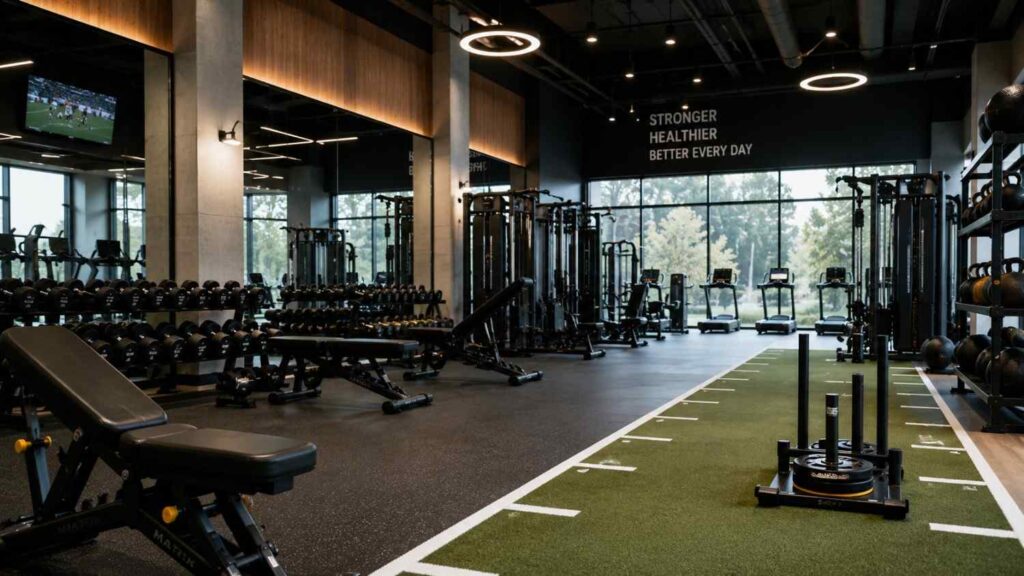
How to Spot a High-Quality Gym: A Practical Guide Before You Join
Learning How to Spot a High-Quality Gym can prevent an expensive mistake. Most gyms know how to make a strong first impression: polished reception areas, impressive equipment lists, dramatic lighting, promotional pricing, and enthusiastic sales tours. Those features may be attractive, but they do not necessarily tell you whether the facility will support months or years of productive training.
The more useful questions are operational. Is the equipment you need available when you train? Are benches, cables, machines, racks, and cardio equipment maintained? Are damaged items removed from use? Do staff appear qualified and attentive? Are high-touch surfaces and locker facilities cleaned regularly? Does the facility have an understandable emergency process?
Professional fitness-facility guidance reflects many of these priorities. ACSM’s Health/Fitness Facility Standards and Guidelines addresses professional staff, member orientation and supervision, emergency planning, operating procedures, equipment, preventive maintenance, signage, and facility design.
Cleanliness is equally practical. CDC guidance for community facilities recommends regular cleaning of high-touch surfaces, while CDC athletic-facility recommendations emphasize keeping shared exercise equipment clean and addressing damaged surfaces that cannot be cleaned properly.
The business relationship also deserves scrutiny. Memberships are recurring financial commitments, and the FTC recommends reading subscription terms, understanding automatic renewal, and checking cancellation requirements before signing.
A strong gym therefore needs to pass three tests: it should support your training, operate responsibly, and treat you transparently as a customer.
What Makes a Gym High Quality?
A high-quality gym provides a training environment that is functional, safe, clean, appropriately staffed, and reliable from one visit to the next. That definition deliberately avoids words such as “luxury,” “premium,” or “exclusive” because price and visual presentation do not necessarily reflect operational quality.
A simple strength facility can be excellent if its racks, platforms, bars, benches, plates, and flooring are maintained and available. A more expensive health club can still disappoint if machines remain broken, popular equipment is constantly unavailable, cleaning is inconsistent, or membership policies are difficult to understand.
One useful way to judge quality is to imagine what happens on an ordinary Tuesday evening rather than during a carefully managed sales tour. Are weights organized? Are broken machines clearly identified? Do staff respond when members need help? Can people move safely through the free-weight area? Are bathrooms and locker rooms maintained even during busy periods?
ACSM’s fitness-facility standards cover equipment, preventive maintenance, professional staff, emergency planning, member supervision, operating procedures, and facility design. These categories reinforce an important point: a professional gym is a system of operations, not a collection of expensive machines.
I recommend evaluating at least five dimensions together: equipment reliability, cleanliness, staff competence, safety procedures, and customer transparency. One strength cannot completely compensate for serious weaknesses elsewhere.
If you’re comparing multiple facilities, this practical guide on choosing the right gym offers additional considerations for matching a gym to your fitness goals and personal preferences.
The best facility for you should also align with your training goals. A bodybuilding-focused gym, group-fitness studio, powerlifting facility, multipurpose health club, and budget commercial gym may all be high quality while serving very different users.
| Evaluation Factor | Why It Matters | Priority |
|---|---|---|
| Equipment Condition | Ensures safe and effective workouts | High |
| Facility Cleanliness | Reduces hygiene risks and improves member experience | High |
| Trainer Qualifications | Supports proper exercise guidance and safety | High |
| Safety Measures | Improves emergency preparedness and member protection | High |
| Space & Layout | Makes workouts comfortable and efficient | Medium |
| Peak Hour Capacity | Reduces waiting time for equipment | Medium |
| Accessibility | Makes the facility usable for a wider range of members | Medium |
| Membership Transparency | Prevents unexpected fees and contract issues | High |
Look for Consistent Maintenance, Not Just New Equipment
Equipment does not have to be new to be high quality. Older machines, racks, benches, bars, and dumbbells can remain excellent for years when they are maintained correctly. Conversely, recently purchased equipment can quickly become frustrating or unsafe when maintenance is neglected.
During a visit, inspect several types of equipment rather than only the most impressive machines. Look at cable systems, selectorized machines, benches, cardio equipment, racks, adjustment mechanisms, handles, upholstery, dumbbells, plates, and flooring.
Warning signs include badly frayed cables, loose components, unstable benches, damaged grips, missing adjustment pins, torn surfaces that cannot be cleaned effectively, and machines that remain unavailable for long periods.
ACSM includes both equipment and preventive maintenance within its professional facility guidance.
The way a gym responds to damage can be as informative as the damage itself. Equipment clearly labeled and removed from use until repair suggests management has identified the issue. A visibly damaged machine left available for normal use suggests a weaker maintenance culture.
Also inspect organization. Barbells, plates, dumbbells, attachments, collars, and benches should have logical storage locations. Consistent organization improves both safety and workout efficiency.
What you are really evaluating is reliability. Members should be able to arrive expecting their normal training equipment to function rather than repeatedly redesigning sessions because machines, cables, or benches are unavailable.
Cleanliness Should Be Visible Throughout the Facility
Cleanliness should be evaluated across the entire member experience rather than judged by the reception desk alone. Training floors, mats, benches, machine handles, free-weight equipment, bathrooms, locker rooms, showers, drinking areas, and frequently touched surfaces all provide useful clues about routine maintenance.
CDC guidance for community facilities, including gyms, recommends regular cleaning of high-touch surfaces. Its athletic-facility guidance also emphasizes cleaning shared equipment and repairing or disposing of damaged surfaces that cannot be cleaned effectively.
Look for a visible process. If members are expected to wipe equipment, are cleaning stations stocked? Are spray bottles empty or towels missing? Do staff perform additional scheduled cleaning, or is hygiene completely outsourced to members?
Bathrooms and locker rooms are particularly useful indicators because they experience frequent traffic, moisture, and repeated surface contact. A spotless reception area combined with neglected changing facilities is not strong evidence of operational quality.
A gym does not need to appear sterile. Exercise spaces naturally accumulate sweat, chalk, dust, and signs of regular use. The important distinction is between normal use and persistent neglect.
Damaged mats, cracked upholstery, overflowing bins, dirty water stations, or consistently unclean bathrooms suggest broader maintenance weaknesses.
Good gym cleanliness is ultimately about having a repeatable system that continues working during busy hours—not simply preparing the building before prospective members arrive for tours.
Related Articles
How Do You Evaluate Equipment and Training Space?
Evaluating equipment starts with one simple principle: the facility should support the training you actually intend to perform. A gym can own hundreds of machines and still be a poor fit if the stations you need are unavailable, badly maintained, or constantly occupied.
Before visiting, write down the major components of your normal routine. A strength-focused member may require racks, platforms, barbells, plates, adjustable benches, dumbbells, and cable stations. Someone focused on general fitness may value user-friendly resistance machines and cardio equipment. An endurance athlete may care more about treadmills, bikes, rowers, stair machines, or indoor training space.
Then consider quantity. A facility may technically advertise that it has a squat rack, but one rack serving hundreds of members can create significant waiting during peak hours. Duplication of high-demand equipment is often more valuable than having dozens of rarely used specialty machines.
Layout matters as much as inventory. ACSM facility guidance includes equipment and facility design because machines need to be positioned in ways that support safe movement and operation.
Look at walkways, plate storage, bench placement, cable areas, stretching zones, group-exercise spaces, and free-weight traffic. Equipment should not force members to repeatedly cross through active lifting areas or step over stored objects.
Finally, evaluate the room during realistic demand. A tour at midmorning may show perfect availability, while the same gym at 6 p.m. may function completely differently.
A quality fitness center provides not merely equipment ownership but usable access to appropriate equipment within a workable space.
Match the Equipment to Your Actual Training Goals
Do not let the gym decide which equipment should impress you. Start with your own goals and then evaluate whether the facility supports them.
For strength training, count useful racks, platforms, benches, barbells, plates, cable stations, and dumbbells. Look at maximum dumbbell weight, plate availability, bench adjustability, bar condition, and whether specialty equipment you genuinely use is available.
For hypertrophy-focused training, movement variety may matter more. Check whether the gym provides practical options for the major muscle groups rather than offering many machines that duplicate the same movement.
Cardio users should evaluate both variety and reliability. Test treadmills, bikes, rowers, ellipticals, stair machines, or other equipment you expect to use. Controls, resistance adjustments, displays, safety features, and mechanical movement should function normally.
Beginners should consider usability and support. Machines should be reasonably understandable, and someone should be available to explain adjustment mechanisms or facility rules.
A helpful method is to mentally complete one of your actual workouts during the tour. Where would you warm up? Which station would you use first? What happens if that machine is occupied? Are reasonable alternatives nearby?
Specialized machines are valuable only when they support your training. One rare piece of equipment should not distract you from shortages in basics such as benches, racks, cables, dumbbells, or cardio stations.
The best equipment selection is therefore not the longest list—it is the one that lets you train consistently without unnecessary compromise.
Visit During Peak Hours Before You Sign
Peak-hour crowding can transform an excellent-looking gym into a frustrating training environment. That is why one of the most valuable things you can do before signing is visit at the exact time you expect to exercise most often.
If you plan to train after work, inspect the gym between roughly the same hours. If you prefer early mornings, visit then. Weekend conditions may be different again.
Pay attention to popular equipment. Are squat racks, benches, cable stations, dumbbells, treadmills, and other high-demand stations consistently occupied? Watch whether people are waiting or improvising because their preferred equipment is unavailable.
Traffic flow matters too. Crowding becomes a safety concern when people must step around loaded bars, abandoned dumbbells, benches, or bags to move through the facility.
Group-fitness capacity also deserves attention. A gym advertising a large schedule is less valuable if the classes you want are regularly full or require bookings that disappear immediately.
Ask staff about quieter periods if your schedule is flexible, but treat attendance estimates as general guidance rather than guarantees.
The key metric is not simply the number of members. A busy gym can work well when equipment duplication and layout are appropriate. A less crowded gym can still feel congested if its floor plan is poor.
Availability depends on four factors working together: equipment quantity, member demand, layout, and your schedule.
How Important Are Staff Credentials and Coaching?
Staff quality affects far more than personal-training sessions. Trainers, floor staff, instructors, front-desk employees, and managers influence safety, member orientation, equipment use, emergency response, cleanliness reporting, and the general culture of the facility.
A professional gym should be willing to explain who provides coaching and what qualifications those individuals hold. Certification alone does not guarantee excellent coaching, but identifiable professional credentials can show that a trainer has completed defined education or examination requirements.
The National Strength and Conditioning Association provides one example through credentials such as the NSCA-Certified Personal Trainer and Certified Strength and Conditioning Specialist. NSCA certification pathways use formal eligibility requirements, and relevant credentials incorporate CPR/AED requirements.
Other reputable professional credentialing organizations also exist. The point is not to demand one particular logo but to look for credible, current qualifications that match the service being offered.
Specialization matters as well. General fitness, bodybuilding, strength and conditioning, older-adult exercise, pregnancy, youth training, post-rehabilitation exercise, and competitive sport can require different knowledge.
Professional boundaries are another quality signal. A competent fitness professional should recognize when a problem falls outside their scope and requires medical or other specialist evaluation.
Even if you never hire a trainer, staff behavior matters. Do employees notice unsafe situations? Can someone help with equipment adjustments? Are questions answered professionally?
Strong gyms create an environment where members can train independently while still having access to competent support when it is genuinely needed.
Ask About Trainer Qualifications and Specialties
If you are considering personal training, ask what professional certification or qualification the trainer holds and whether it is current. A reputable coach or facility should be comfortable answering that question.
Then ask a more important follow-up: What type of clients does this trainer usually work with?
A credentialed general-fitness trainer may be excellent for a beginner who wants strength, confidence, and consistency. That same trainer may not be the right choice for elite powerlifting, Olympic weightlifting, advanced endurance programming, or a medically complex situation.
NSCA credentials illustrate the types of formal standards you can look for. Its NSCA-CPT is aimed at personal training, while the CSCS is focused more heavily on strength and conditioning. Relevant pathways include professional requirements such as current CPR/AED certification.
Credentials should still be combined with observation.
Watch how trainers interact with clients. Are they attentive? Do they provide understandable instructions? Do they modify exercises when necessary? Are clients given purposeful programs rather than random collections of exhausting movements?
Ask how progress is measured. A professional coach should be able to explain why an exercise or progression is being used.
Also watch for scope-of-practice problems. Trainers should not casually diagnose injuries or medical conditions beyond their professional role.
The strongest coach combines appropriate qualifications with communication, observation, judgment, professionalism, and experience relevant to the client’s goals.
Good Gyms Provide Orientation and Appropriate Supervision
A quality gym should not assume that every new member immediately understands the building, equipment, rules, and safety expectations.
ACSM facility guidance includes member orientation, education, and supervision among important operating considerations.That does not mean every membership must include personal training, but members should have a reasonable way to learn how the facility works.
Ask what happens after you join. Is there a basic orientation? Will staff show you where equipment is located? Can someone explain machine adjustments or facility rules? Is assistance available if you encounter unfamiliar equipment?
Pay attention to what staff actually do during your tour. A facility may advertise “supportive staff,” but the training floor tells you more. Are employees approachable? Do they notice damaged equipment or unsafe behavior? Do they manage obvious obstructions or simply walk past them?
Advanced trainees may need little technical instruction, but they still benefit from competent facility supervision. Organized floors, functioning equipment, and reasonable safety culture affect everyone.
Supervision should also remain proportionate. A gym should not feel like every independent workout is being monitored unnecessarily. The goal is availability and responsible oversight rather than interference.
Good facilities provide members with independence and a clear support system. You should know whom to ask when something is broken, when you need help adjusting equipment, or when a safety issue occurs.
What Safety and Accessibility Features Should You Check?
Safety is one of the strongest indicators of professional facility management because it reflects planning for problems that may be uncommon but potentially serious.
Ask what happens if a member collapses, becomes injured, or if an evacuation is necessary. Employees do not need to provide confidential internal documents, but relevant staff should be able to explain basic procedures confidently.
ACSM’s health and fitness facility standards include emergency policies and procedures as part of facility operation. Its guidance also addresses automated external defibrillation, professional staff, equipment, and member supervision.
OSHA guidance on emergency action plans similarly emphasizes organized procedures for reporting emergencies and evacuating workplaces where applicable.
Safety also appears in ordinary details. Walkways should be clear, flooring should not create obvious hazards, plates should have storage, damaged equipment should be removed from use, and emergency exits should not be blocked.
Accessibility is another important quality indicator. In the United States, ADA Title III applies to public accommodations including fitness clubs and establishes relevant accessibility and nondiscrimination obligations.
Local rules differ internationally, but the broader principle remains useful: a well-operated facility considers people with different mobility, sensory, communication, and access needs.
Do not judge safety only by whether you personally expect to need these systems. Professional quality often becomes most visible when an unexpected situation occurs.
Ask About Emergency Procedures and AED Readiness
Cardiac or other medical emergencies can occur unexpectedly, which makes emergency readiness an important part of gym quality.
ACSM’s professional facility guidance includes emergency planning and procedures and discusses the role of AED preparation in health and fitness environments.
During a tour, ask whether the facility has an automated external defibrillator and whether relevant staff receive CPR/AED training. You are not trying to conduct an inspection—you are looking for evidence that the facility has thought seriously about emergencies.
A confident explanation is usually more reassuring than vague answers such as “someone probably knows what to do.”
Exits and emergency routes are worth observing as well. OSHA’s emergency-planning guidance emphasizes organized evacuation and emergency-reporting procedures in workplaces where applicable.
Notice whether exits are visible and pathways remain unobstructed. Storage should not interfere with emergency routes.
You can also ask what happens when a member experiences a non-cardiac injury. Is there a clear person responsible for responding? Is first-aid support available? Do staff know how to contact emergency services efficiently?
The purpose is not to make exercise sound dangerous. Serious events are uncommon, but high-quality facilities prepare for low-frequency problems rather than assuming they will never occur.
Emergency readiness is one of those features you hope never to use—but you still want it to be competent.
Accessibility and Layout Are Part of Quality
Accessibility is not an optional luxury feature. It reflects whether a facility has considered the needs of people who may move, communicate, or use equipment differently.
In the United States, ADA Title III applies to qualifying public accommodations, including fitness clubs, and addresses access, nondiscrimination, policy modifications, communication, and applicable architectural requirements.
Federal accessibility standards also contain provisions related to accessible routes and exercise machines.
For a prospective member, evaluate the real experience rather than only checking whether an accessibility symbol is displayed.
Can someone with limited mobility enter the building and reach key training areas? Are pathways unnecessarily narrowed by equipment? Are relevant bathrooms or changing areas accessible where required? Can staff provide reasonable assistance with facility procedures?
Layout quality benefits people without disabilities as well. Clear walkways reduce collisions and congestion. Adequate spacing makes equipment easier to access. Logical storage reduces trip hazards.
Remember that accessibility laws differ outside the United States. A publication targeting another country should replace U.S.-specific legal references with applicable local standards.
The broader principle remains universal: a professional gym is designed around the reality that members have different bodies, abilities, ages, and access needs.
A facility that has thoughtfully planned for diverse users generally demonstrates stronger operational quality than one designed only for a narrow type of member.
How Do You Judge Membership Value and Transparency?
Membership value should be measured by how effectively the facility supports your real behavior, not by how many amenities appear on a promotional list.
Start with frequency of use. A more expensive gym five minutes from home that you use four times per week may provide better value than a cheaper facility requiring a long commute. Conversely, paying for pools, saunas, childcare, premium classes, and recovery areas is poor value if you never use them.
Then examine access. Do opening hours fit your schedule? Is parking practical? Are popular machines available during your normal training time? Are classes included or charged separately? Is personal training optional?
Once practical value is clear, move to the contract.
Ask for the complete cost, including initiation fees, monthly dues, annual facility charges, class fees, training commitments, and any other recurring costs. Check minimum terms, automatic renewal, cancellation, membership freezes, and notice requirements.
FTC consumer guidance recommends reading subscription terms, understanding auto-renewal, and researching cancellation and fee complaints before signing.
In 2025, the FTC sued operators of LA Fitness and related brands, alleging practices that made cancellation unnecessarily difficult. Those allegations relate to a specific case and should not be generalized to the entire industry, but they demonstrate why cancellation procedures deserve attention.
A quality gym should let you review important terms without unnecessary pressure.
Read the Contract Before You Look at the Discount
Promotional offers are designed to draw attention to the lowest visible price. Your job is to identify the actual financial commitment.
Ask what you will pay today, each month, each year, and when any additional charges occur. Look for initiation fees, maintenance or annual facility fees, class charges, guest fees, locker fees, and personal-training commitments.
Then check the length of the agreement. Is the membership month-to-month, annual, or tied to a minimum term? Does it renew automatically?
FTC consumer advice recommends understanding subscription terms, auto-renewal, and cancellation requirements before signing.
Cancellation deserves particular attention. Ask exactly how it must be completed. Can you cancel online, in person, by mail, or through another process? How much notice is required? Are there early termination charges?
Membership freezes also matter if you travel frequently, become temporarily injured, or expect seasonal changes in your schedule.
Get important promises in writing. If a salesperson says an annual fee will be waived or that you can cancel through an app, verify that the written agreement supports that statement.
Personal-training contracts should be reviewed separately because they may contain different commitments.
A transparent facility should not depend on customers signing quickly without reading. Clear financial terms are part of professional service quality, not merely an administrative detail.
Use a Trial Visit as a Final Quality Test
A trial workout is one of the most valuable steps in learning How to Spot a High-Quality Gym because it transforms abstract promises into direct experience.
Schedule the trial during the hours you expect to train regularly. Then perform a normal or representative workout rather than wandering around the building.
Evaluate eight areas:
- Equipment access: Were the stations you needed reasonably available?
- Maintenance: Did machines, cables, benches, and free weights function properly?
- Cleanliness: Were high-use areas and bathrooms maintained?
- Crowding: Did waiting significantly disrupt your workout?
- Staff: Were employees visible, approachable, and professional?
- Safety: Did equipment placement and member behavior feel well managed?
- Atmosphere: Did the environment make you want to train there regularly?
- Business clarity: Do the actual costs and cancellation terms match what you were told?
Pay attention to small details. Are plates returned? Are benches constantly left in walkways? Are cleaning stations empty? Do trainers seem engaged with clients?
Do not judge whether everyone in the gym resembles you. A strong facility can serve beginners, experienced lifters, older adults, athletes, and people with different abilities.
Reviewing other key factors to consider before making a final decision can also help you compare gyms more objectively and avoid relying solely on marketing claims.
The important question is whether the culture feels respectful and compatible with your goals.
After the session, compare what you experienced with the sales presentation. When the two match, confidence in the facility increases.
Quick Answer About How to Spot a High-Quality Gym
To understand How to Spot a High-Quality Gym, evaluate the facility as an operating environment rather than judging it by décor, branding, or the number of machines shown in advertisements. Start by inspecting whether equipment is functional, maintained, safely positioned, and available during the hours you actually plan to train. Look for clean high-touch surfaces, organized free-weight areas, usable locker facilities, and visible housekeeping procedures.
Staff quality matters too. Ask whether trainers hold recognized professional credentials, whether relevant employees receive CPR/AED training, and how new members are oriented to the equipment. Professional facility guidance from ACSM addresses many of these areas, including staff, member supervision, emergency procedures, equipment, operating practices, facility design, and preventive maintenance.
You should also inspect emergency readiness and accessibility. A well-operated facility should know how to respond if someone becomes injured or experiences a medical emergency, and its layout should allow members to move around safely.
Finally, review the business side. Ask for the complete membership cost, annual or initiation charges, auto-renewal terms, cancellation method, freeze policy, and any separate training commitments before signing.
A useful rule is simple: visit during your normal training time and complete an actual workout before committing. A trial session exposes crowding, equipment availability, staff behavior, cleanliness, noise, atmosphere, and layout far better than a sales tour.
FAQ Section
The FAQ section should answer the short, practical questions readers often ask immediately before joining a facility. These questions usually arise after the broader evaluation criteria have been understood and therefore benefit from direct, decision-oriented answers.
Many prospective members want one simple sign that distinguishes a good gym from a bad one. In practice, no single factor is enough. Equipment quality without cleanliness is insufficient. Excellent trainers cannot compensate for consistently unsafe layouts. Attractive pricing loses value when equipment is unavailable during the user’s normal training hours.
Professional standards support evaluating facilities as systems. ACSM addresses staff, member supervision, equipment, maintenance, emergency procedures, and facility operations together rather than treating any one element as the sole measure of quality.
Cleaning also deserves a direct answer because gyms involve repeated contact with shared equipment. CDC guidance recommends regular cleaning of high-touch surfaces and appropriate cleaning of shared athletic equipment.
Membership questions are just as practical. A facility can provide an excellent physical environment while offering an agreement that does not fit your finances or schedule. FTC consumer advice therefore supports reviewing auto-renewal, cancellation, and fees before signing.
The FAQs below condense these broader principles into quick answers suitable for readers comparing facilities.
Frequently Asked Questions About How to Spot a High-Quality Gym
Frequently asked questions about How to Spot a High-Quality Gym tend to focus on the visible signs people can check during a tour. The most useful indicators are equipment reliability, cleanliness, staff competence, safety preparation, manageable crowding, accessibility, and clear membership terms.
Start with functionality. Machines and free weights should be maintained, and heavily used equipment should exist in enough quantity that you can complete your normal workout without excessive waiting. A gym that owns one excellent rack but has long queues for it every evening may not provide good practical value for a strength-focused member.
Next, examine operations. Look for stocked cleaning stations, maintained bathrooms, organized free-weight storage, and staff who respond when equipment or safety problems arise.
Staff credentials are relevant when coaching is provided. Recognized professional certifications can be useful evidence of formal preparation, but experience and communication should also match the client’s goals.
Emergency readiness should not be ignored. Ask about AED availability, CPR/AED-trained staff, and emergency procedures.
Finally, review the membership agreement. Confirm the complete cost, automatic renewal, annual charges, cancellation method, and any separate personal-training commitments before signing.
A quality gym should not make reasonable questions difficult to answer.
The simplest decision strategy is to combine a facility inspection with an actual trial workout during your normal training hours. That gives you real evidence about equipment access, crowding, cleanliness, staff availability, and culture before money changes hands.
What are the most important signs of a good gym?
The strongest signs are consistent equipment maintenance, visible cleanliness, organized training spaces, qualified and approachable staff, sensible safety procedures, reasonable access to popular equipment, and clear membership terms.
A good gym does not need luxury amenities. Older equipment can be excellent when properly maintained, while a premium facility can still disappoint if machines are frequently unavailable or broken.
Pay particular attention during normal operating hours rather than relying on a sales tour. Watch whether staff respond to problems, whether weights are stored logically, and whether bathrooms and locker rooms remain maintained during busy periods.
Also judge the facility against your goals. A bodybuilding gym, group-exercise studio, strength facility, and multipurpose health club can all be high quality while serving different users.
The most reliable signal is consistency. The equipment, staff, safety, cleanliness, and business practices should all support the experience the gym promises to provide.
Should a good gym have an AED?
AED readiness is a valuable safety indicator in a fitness environment. ACSM’s professional health and fitness facility guidance includes emergency procedures and public-access defibrillation as part of broader facility safety planning.
During a tour, ask whether an automated external defibrillator is available and whether relevant employees are trained in CPR/AED response. The exact legal requirements vary according to jurisdiction, facility type, and local regulations, so a universal legal rule should not be assumed.
Your goal as a prospective member is not to audit the emergency plan. You simply want to know that management has considered medical emergencies and trained staff appropriately.
A clear, confident response is a stronger quality signal than employees appearing uncertain about where emergency equipment is located or what procedure should be followed.
Emergency readiness is easy to ignore precisely because most members hope they will never need it. Professional facilities plan for those rare events anyway.
How can I check whether a gym trainer is qualified?
Ask the trainer or facility which current certification or professional qualification the coach holds, then verify whether that credential is appropriate for the service being offered.
Recognized organizations such as NSCA provide formal certifications including the NSCA-CPT and CSCS, with defined eligibility requirements and CPR/AED components. Other established professional certification organizations also exist.
Certification should not be your only criterion. Ask whether the trainer regularly works with people who share your goals, training experience, age group, or relevant limitations.
Observe communication as well. A good trainer should explain exercises clearly, pay attention during sessions, modify movements appropriately, and avoid making medical diagnoses outside their professional scope.
Ask how progress is measured and how programs are adjusted over time.
The strongest combination is current professional education, relevant experience, good communication, responsible boundaries, and the ability to create a program that matches the client’s real needs.
How clean should a gym be?
A gym should show evidence of regular cleaning even though a busy training environment will naturally show signs of use.
Look for maintained high-touch surfaces, reasonably clean equipment, bathrooms and locker rooms that receive regular attention, stocked cleaning stations where members are expected to wipe equipment, and a broader staff cleaning process.
CDC community-facility guidance recommends regular cleaning of high-touch surfaces, while athletic-facility guidance emphasizes maintaining shared exercise equipment and addressing damaged surfaces that cannot be cleaned properly.
You do not need to expect a sterile environment. Sweat, chalk, and normal traffic are part of many gyms.
The warning signs are chronic neglect: overflowing bins, persistently dirty bathrooms, empty cleaning stations, damaged upholstery, unclean mats, or visible grime that remains over repeated visits.
Good hygiene comes from a consistent operating process rather than relying entirely on individual members to clean everything themselves.
Should I visit a gym before buying a membership?
Yes. A trial workout is much more informative than a tour because it reveals how the facility works under the conditions you will actually experience.
Visit during your normal training time whenever possible. Use the equipment you expect to rely on, check how long you wait for popular stations, and observe whether the layout remains comfortable during busy periods.
Pay attention to cleanliness, temperature, music volume, locker rooms, staff presence, equipment condition, and member behavior.
If group classes matter, ask whether you can observe or trial the type of session you plan to attend.
A trial visit also helps you assess culture. The gym should feel like an environment where you can train consistently rather than somewhere that only looks impressive.
Do not let a salesperson rush the decision immediately afterward. Review the contract and compare the real workout experience with what was promised during the tour.
When observation and marketing agree, you have much stronger evidence that the membership will meet your expectations.
What should I check in a gym membership contract?
Check the complete recurring cost rather than only the advertised monthly price.
Review initiation charges, annual or maintenance fees, minimum contract length, automatic renewal, cancellation procedures, notice requirements, membership freezes, guest charges, class fees, and any separate personal-training agreement.
FTC consumer guidance recommends understanding subscription terms, auto-renewal conditions, and cancellation procedures before signing.
Ask how cancellation must be completed and get important promises in writing. If a salesperson says the membership can be frozen online or cancelled without a fee, confirm the agreement contains the same terms.
Also check whether a trial automatically converts into a paid membership.
A professional contract should be understandable without relying entirely on verbal explanations.
Taking ten extra minutes to read the agreement can prevent months of frustration later. Gym quality includes how the business treats members financially, not only what happens on the training floor.
Is an expensive gym automatically better?
No. A higher membership price may reflect more locations, newer equipment, pools, saunas, childcare, classes, premium locker rooms, lower member density, or other amenities, but price alone does not guarantee operational quality.
An inexpensive gym with maintained equipment, good cleaning procedures, responsible staff, and manageable crowding can provide excellent value.
Likewise, a premium health club may be worth its higher cost when you regularly use the additional services it provides.
Evaluate value based on your behavior. If you never use the pool, spa, classes, or recovery facilities, those features should not strongly influence your decision.
Location also matters. A modest gym five minutes away may produce more consistent training than an elaborate club located far from home.
Compare equipment availability, operating hours, safety, cleanliness, staff quality, convenience, and the full membership cost.
The best facility is not necessarily the cheapest or most expensive. It is the one that reliably provides the features you actually use at a price you consider reasonable.
| Feature | Quality Indicator | Member Benefit |
|---|---|---|
| Strength Equipment | Regularly maintained | Reliable performance |
| Cardio Machines | Functional and available | Consistent training |
| Free Weight Area | Organized and spacious | Safer lifting experience |
| Cleaning Stations | Easily accessible | Better hygiene |
| Certified Staff | Professional qualifications | Trusted fitness guidance |
| Emergency Equipment | AED and first-aid readiness | Improved safety |
| Trial Membership | Available before signup | Better decision-making |
| Clear Contracts | Transparent policies | Fewer membership disputes |
Conclusion
A quality gym is ultimately defined by how well it supports consistent, safe, productive exercise. The facility does not need to be luxurious, and it does not need to contain every machine on the market. It needs to provide dependable access to appropriate equipment, organized training areas, reasonable cleanliness, competent staff, responsible emergency planning, and clear business practices.
Equipment should be evaluated for maintenance and availability rather than age alone. A well-maintained older machine is more useful than a new machine that is frequently broken or unavailable. Crowding should also be judged during the time you actually plan to train.
Staff and coaching matter because even independent members rely on the facility’s culture and operational standards. Recognized credentials, appropriate CPR/AED preparation, professional communication, member orientation, and responsible supervision all strengthen the experience.
Safety and accessibility deserve equal attention. Emergency procedures, clear exits, sensible equipment layout, and an environment that accommodates a broad range of users are signs of serious management.
Finally, membership transparency is part of quality. Read the agreement, understand automatic renewal and cancellation, and know the full recurring cost.
Most importantly, complete a trial workout before committing when possible. The real training experience will tell you more than any brochure.
Use Quality Signals Instead of Marketing Claims
Marketing naturally highlights features that photograph well: new machines, polished locker rooms, pools, saunas, large class schedules, dramatic lighting, and premium recovery areas.
Those amenities may be genuinely valuable, but operational quality is better judged through signals that are difficult to maintain without good management.
Look at equipment condition. Maintained machines and clearly handled repairs indicate that upkeep matters. Look at storage. Organized plates, dumbbells, bars, and attachments show that the facility has systems rather than relying entirely on member goodwill.
Look at staff. Employees who answer questions professionally, respond to equipment problems, and supervise the floor appropriately strengthen both safety and service quality.
Look at emergency planning, accessibility, and cleaning. These features rarely dominate advertisements, yet they reveal how seriously the facility approaches member wellbeing.
Finally, compare promises with reality.
If a gym advertises extensive strength equipment, test availability at peak time. If cleanliness is a major selling point, inspect high-traffic bathrooms and shared equipment. If professional coaching is emphasized, ask about trainer credentials.
The most reliable quality signal is consistency between marketing claims and ordinary member experience.
When the facility delivers what it promises even during busy periods, you have much stronger evidence that management quality is real.
Choose the Gym You Can Use Consistently
A technically excellent gym can still be the wrong choice when it does not fit your life.
Before comparing facilities, identify your personal non-negotiables. These may include distance from home or work, opening hours, parking, public transportation, childcare, showers, equipment type, class schedules, accessibility, or training culture.
A powerlifter may prioritize racks, platforms, bars, and plates. A beginner may care more about staff support and easy-to-use machines. A commuter training before work may value showers and reliable early opening more than a sauna.
Then consider friction. How much effort does it take to reach the gym? Will parking be difficult at the time you train? Are popular stations constantly occupied? Does the atmosphere make you comfortable enough to return regularly?
Trial visits are particularly helpful because they reveal whether theoretical convenience becomes real convenience.
The objective is not to find a perfect facility. Every gym involves trade-offs.
Choose the one that provides the strongest combination of training support, maintenance, safety, staff quality, cleanliness, accessibility, reasonable crowding, and transparent pricing within your practical routine.
That is ultimately the most useful application of How to Spot a High-Quality Gym: identify the facility where quality makes consistent training easier rather than merely making the tour more impressive.