
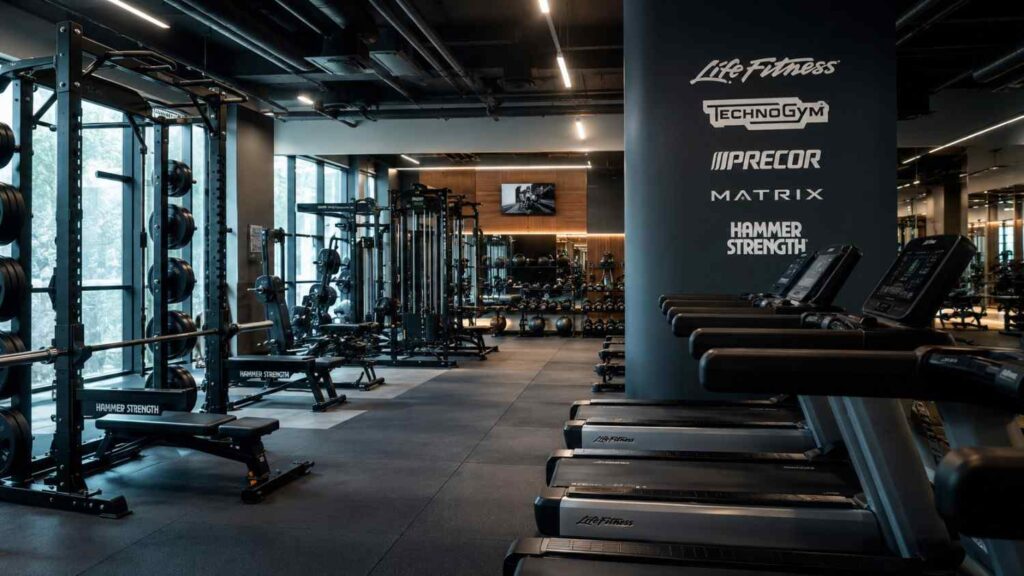
Top Gym Equipment Brands for 2026: Seven Brands Worth Considering
Selecting gym equipment is not simply a matter of choosing the company with the most familiar name, largest touchscreen, or heaviest-looking frame. A successful purchase must match the people using the equipment, the training environment, available floor space, maintenance capabilities, and long-term business objectives. Equipment that performs well in a private home may be unsuitable for a busy membership club, while a full commercial machine may be unnecessarily large and expensive for occasional household use.
The top gym equipment brands for 2026 include Life Fitness and Hammer Strength, Technogym, Precor, Matrix Fitness, Rogue Fitness, REP Fitness, and NordicTrack. These companies serve different parts of the market. Some focus on complete commercial fitness facilities, while others are strongest in performance training, garage gyms, space-efficient functional equipment, luxury wellness environments, or digitally guided home cardio.
This guide does not attempt to name one universal winner. Instead, it explains where each brand is strongest and what buyers should verify before placing an order. The best decision should be based on equipment purpose, local support, warranty terms, user experience, expandability, and total ownership cost. By comparing those factors carefully, both first-time buyers and experienced gym operators can create safer, more practical, and more financially sustainable training environments.
| Buying Factor | Why It Matters | What to Check |
|---|---|---|
| Equipment Durability | Affects long-term reliability | Frame quality, construction and intended usage |
| Warranty Coverage | Reduces future repair costs | Commercial-use warranty, labor and parts coverage |
| Service Network | Faster maintenance and repairs | Availability of local technicians and replacement parts |
| Product Range | Simplifies future expansion | Cardio, strength, cable and free-weight options |
| Floor Space | Prevents layout issues | Equipment dimensions and required clearance |
| Digital Features | Improves training experience | Workout apps, connected consoles and software support |
| Total Ownership Cost | Reflects long-term investment | Delivery, installation, maintenance and subscriptions |
| Upgrade Potential | Supports future growth | Compatible attachments and accessory ecosystem |
How We Selected the Best Gym Equipment Brands
The best gym equipment brands should be evaluated through a combination of product range, intended use, equipment design, service accessibility, warranty coverage, and ownership costs. Brand popularity can be useful as an initial signal, but it does not prove that every product in a manufacturer’s catalog will meet a buyer’s needs. Even reputable companies may produce several equipment lines designed for different budgets, usage levels, or types of facility.
This comparison therefore focuses on how well each manufacturer serves a specific buyer. Commercial facilities need machines that can tolerate repeated daily use and can be maintained without extended downtime. Home-gym owners typically need equipment that provides strong functionality within a smaller footprint. Performance facilities may prioritize rack stability, attachment compatibility, plate storage, and barbell access, while hotels may place more importance on intuitive controls, visual design, and equipment that occasional users can understand quickly.
Another important consideration is regional availability. A product may look attractive online but become less practical when shipping, import duties, installation, and replacement parts are considered. For this reason, buyers should evaluate the complete ownership experience rather than comparing product specifications in isolation. The sections below explain the most important selection criteria in greater detail.
Durability, Product Range and Intended Usage
Durability should always be assessed in relation to expected usage. A treadmill used by one person several times per week faces different demands from a commercial treadmill used continuously throughout the day. High-traffic facilities expose equipment to frequent adjustments, heavy loads, cleaning products, perspiration, accidental impacts, and users with widely different body sizes and training habits. Commercial equipment must therefore balance structural strength with intuitive operation and convenient maintenance access.
Product range also influences whether a brand is suitable for a complete facility. A large club may need treadmills, bikes, ellipticals, stair climbers, selectorized strength machines, cable stations, racks, benches, storage, barbells, plates, and functional-training accessories. Purchasing compatible products from a coordinated range can improve visual consistency and simplify staff training. However, it does not automatically mean that every category must come from the same manufacturer.
Buyers should confirm the intended use of every model. Some brands sell both residential and commercial equipment under the same company name, and the machines may have different frames, warranties, motors, consoles, or recommended usage levels. Marketing terms such as “professional quality” should not replace written confirmation that a product is approved and warranted for the intended environment.
Service Coverage, Warranty and Replacement Parts
A warranty is only useful when buyers understand exactly what it includes. Coverage may differ for the structural frame, welds, motor, electronics, cables, pulleys, bearings, upholstery, labor, and normal wear components. Some parts may receive lengthy protection while items exposed to regular wear receive much shorter coverage. Commercial use can also reduce or change the warranty period compared with residential use.
REP Fitness, for example, publishes category-specific warranty terms and distinguishes between home and commercial coverage for a number of products. Its current warranty information lists different periods for items such as bumper plates, dumbbells, cables, pulley components, upholstery, and rack or functional-trainer frames. This illustrates why buyers should read the full warranty rather than relying on a prominent “lifetime warranty” statement.
Service availability is equally important. Before buying, ask who performs repairs in your location, whether travel and labor are included, and how long commonly replaced parts usually take to arrive. Commercial facilities should also ask whether preventive maintenance is required to preserve warranty coverage. A technically impressive machine can become an expensive problem if no qualified technician or replacement components are readily available.
Technology and Total Ownership Cost
Modern gym equipment increasingly includes touchscreens, streaming content, user accounts, performance tracking, personalized programs, software integrations, and remote equipment monitoring. These features can make workouts more engaging and help commercial operators understand usage patterns. However, connected technology also introduces additional costs and operational considerations that do not apply to simpler machines.
Buyers should determine which functions remain available without an active subscription. They should also ask how software updates are delivered, how long a console is expected to receive support, what internet connection is required, and whether user data can integrate with existing facility systems. A large screen may improve the initial presentation of a gym, but its value depends on whether members consistently use the available features.
Total ownership cost includes much more than the equipment price. It may include delivery, lifting equipment, assembly, floor reinforcement, electrical work, internet connectivity, software subscriptions, preventive maintenance, replacement parts, and lost revenue during downtime. Resale value and upgrade compatibility may also matter. When comparing quotations, buyers should calculate a realistic multi-year cost rather than choosing the lowest purchase price. A more expensive machine may offer better long-term value when it receives dependable local service and requires fewer operational compromises.
Best Commercial Gym Equipment Brands for 2026
Commercial fitness facilities require more than attractive machines. They need equipment that can serve a diverse user population, withstand frequent operation, and remain maintainable throughout its useful life. The strongest commercial brands generally provide several cardio and strength categories, facility-planning assistance, installation options, product education, and access to authorized service partners. Local capabilities can vary, so operators should verify regional support rather than assuming that a global brand offers identical service in every country.
Facility type also affects brand selection. A bodybuilding gym may devote more space to plate-loaded machines, racks, benches, and free weights. A hotel fitness room may need a smaller selection of intuitive cardio machines and compact strength equipment. Rehabilitation, corporate, university, and luxury-club environments each have different accessibility, software, design, and usage requirements.
The best commercial gym equipment brands for 2026 should therefore be treated as a shortlist rather than a fixed ranking. Life Fitness and Hammer Strength offer complementary commercial cardio and performance-strength categories. Technogym places strong emphasis on premium design and connected wellness experiences. Precor and Matrix Fitness provide broad commercial ranges spanning cardio, strength, and facility solutions. The following profiles explain where each option may fit most effectively.
Life Fitness and Hammer Strength
Best for: Full commercial facilities and performance-focused strength areas
Life Fitness and Hammer Strength form a broad equipment combination for operators who want traditional cardio, selectorized strength, functional training, racks, and plate-loaded equipment. Life Fitness currently offers treadmill, elliptical, bike, indoor-cycle, stair-climber, rower, console, selectorized, cable, bench, and storage categories. Hammer Strength adds a more performance-oriented identity through racks, rigs, platforms, plate-loaded machines, fixed barbells, dumbbells, plates, and conditioning accessories.
This combination can work well in a full-service health club because different areas can be designed around distinct training needs while remaining within a related brand ecosystem. Life Fitness equipment may serve general cardio and approachable strength zones, while Hammer Strength can support heavier resistance training, athletic development, and dedicated free-weight areas.
Hammer Strength also states that its racks are engineered and tested beyond applicable EN and ASTM standards. Buyers should still request the certification and technical documents for the exact model being considered, especially where local safety or procurement rules apply.
The main limitation is that larger racks, platforms, and plate-loaded machines require careful floor planning. Operators must account for loading paths, plate storage, spotting space, ceiling height, and circulation between stations.
Technogym
Best for: Premium clubs, luxury hotels and digitally connected wellness spaces
Technogym is particularly relevant to facilities that view equipment as part of a wider wellness and member-engagement experience. The company offers commercial and home equipment across cardio, strength, functional training, and digital services. Its positioning often appeals to luxury hotels, premium residential developments, corporate wellness centers, medical-wellness environments, and health clubs where design consistency is an important part of the customer experience.
A major differentiator is the Technogym digital ecosystem. The company describes an environment in which users can connect to personalized experiences through equipment and mobile devices. Its Mywellness platform supports connections among equipment, applications, wearables, management software, and other services.
This integration can help operators deliver digital programs beyond the gym floor, track participation, and coordinate member experiences. However, the value depends on implementation. Purchasing connected equipment without a clear onboarding, programming, and engagement strategy may result in expensive features that members rarely use.
Facilities should evaluate software fees, staff training, data integrations, internet requirements, and compatibility with existing membership systems before committing. Technogym is strongest when its design and digital capabilities support the facility’s broader business model rather than functioning as isolated premium features.
Precor and Matrix Fitness
Best for: General fitness clubs, hospitality facilities and cardio-heavy layouts
Precor and Matrix Fitness are practical commercial options for facilities that need coordinated cardio and strength equipment. Precor’s current commercial categories include treadmills, ellipticals, bikes, stair climbers, Adaptive Motion Trainers, selectorized machines, plate-loaded equipment, cable stations, benches, and racks. The company also highlights a network of sales, support, service, and distributor partners, although actual availability should be confirmed for the buyer’s location.
Matrix Fitness similarly offers commercial cardio and strength solutions, including equipment designed for gyms, hotels, and other fitness facilities. Its portfolio allows operators to compare multiple console and product configurations within a coordinated brand family.
When comparing Life Fitness vs Technogym vs Precor or Matrix, operators should arrange hands-on demonstrations whenever possible. Small design differences can significantly influence user satisfaction. These include step-up height, handle position, screen responsiveness, adjustment mechanisms, seat shape, stride feel, noise, and the clarity of exercise instructions.
Neither brand should be chosen based only on catalog breadth. The more important questions concern regional service responsiveness, spare-parts access, staff familiarity, commercial warranty terms, and how well each machine accommodates the facility’s actual member population.
Best Strength Equipment Brands for Home and Garage Gyms
Strength-focused home gyms have different purchasing priorities from large commercial facilities. Home users often need equipment that can perform several functions without occupying an entire room. They may also want to begin with a basic rack, barbell, plates, and bench before adding cable attachments, storage, specialty bars, or conditioning tools. A modular product ecosystem can therefore be more valuable than a large catalog of standalone machines.
Room dimensions must be considered carefully. A rack may fit within the floor area but still conflict with a low ceiling, garage door, lighting fixture, or wall-mounted storage. Users also need space to load plates, move a barbell, use spotter arms, and perform exercises outside the rack. Flooring, noise, anchoring requirements, and equipment delivery should be planned before ordering heavy components.
Rogue Fitness and REP Fitness are among the best home gym equipment brands for users who prioritize strength training. Rogue has a strong identity in barbells, racks, sleds, storage, and conditioning equipment. REP Fitness is especially competitive in modular rack systems, benches, functional trainers, and integrated cable configurations. Neither brand is ideal for every buyer, but both offer expandable ecosystems that can support a gym as training needs develop.
Rogue Fitness
Best for: Power racks, barbells and serious strength training
Rogue Fitness specializes in strength and conditioning equipment, including barbells, power racks, sleds, storage systems, and accessories. The company is also associated with major competitive strength and functional-fitness events, including the CrossFit Games, USA Weightlifting, the Arnold Strongman Classic, and World’s Strongest Man.
For home and performance-gym buyers, Rogue’s key advantage is its broad strength ecosystem. Users can build around a rack and later add storage, pull-up options, safety systems, landmine attachments, plate holders, or other compatible components. Rogue also offers freestanding, wall-mounted, and rack-attached storage solutions for bars, plates, and accessories.
Rogue is particularly suitable for buyers who prioritize traditional barbell training, Olympic lifting, powerlifting, functional fitness, or athletic conditioning. It may be less appealing to someone who mainly wants a compact cable machine or app-guided workouts.
Regional cost must be evaluated carefully. Heavy racks, benches, and plates can generate significant shipping or import expenses. Buyers should also confirm whether a product must be bolted down, whether attachments match the selected rack series, and how warranty terms differ across product categories.
REP Fitness
Best for: Modular home gyms and space-efficient functional training
REP Fitness is a strong option for home-gym owners who want to combine traditional strength training with cable-based exercise. Its product categories include racks, benches, barbells, plates, functional trainers, cable towers, and rack-mounted cable systems. The company’s functional-trainer range currently includes wall-mounted units, standalone machines, and systems designed to integrate with compatible racks.
This modular approach can be useful in rooms where separate power racks, cable stations, lat-pulldown machines, and Smith machines would require too much space. REP’s Summit configurations, for example, are designed to combine several functions within a four-post setup. The company notes that this compact design creates trade-offs, including tighter working space and the need for front-foot extensions when certain setups are not bolted down.
In a Rogue Fitness vs REP Fitness comparison, Rogue may appeal more strongly to buyers focused on conventional racks, barbells, and competition-style strength training. REP may be more attractive to users who prioritize integrated cable functionality and space efficiency.
Before ordering, confirm rack-series compatibility, required stabilizers, ceiling clearance, attachment interference, delivery dimensions, and whether the selected warranty applies to home or commercial use.
Best Connected Home Cardio Brand
Connected home cardio combines traditional fitness equipment with digital programming, performance data, automatic adjustments, and instructor-led content. These systems can be helpful for people who struggle to plan workouts independently or prefer a more structured training experience. Instead of manually selecting speed, incline, or resistance throughout every session, users may follow programs designed around specific fitness goals.
However, connected equipment is not automatically better than a traditional machine. The value of a digital platform depends on whether the buyer will use it consistently. A person who prefers watching television, listening to music, or following a separate training plan may not benefit enough from a paid subscription to justify the added complexity.
Buyers should also understand the relationship between the machine and its software. Important questions include which features work without a membership, whether automatic adjustments require a paid plan, how user profiles are managed, and what happens if software support for older hardware changes. Internet quality, screen placement, account setup, and recurring subscription costs all affect the ownership experience.
NordicTrack is one of the most recognizable connected home cardio brands because its treadmills, bikes, and ellipticals integrate with iFIT. The platform’s guided programming can be valuable, but the equipment should still be assessed as a physical machine, not only as a screen-based service.
NordicTrack
Best for: Interactive treadmills, bikes and ellipticals for home use
NordicTrack offers home treadmills, exercise bikes, ellipticals, and other equipment designed to work with the iFIT connected-training platform. Current iFIT features can include guided programs, progress tracking, personalized recommendations, and automatic workout adjustments on compatible machines. Some features depend on the selected equipment, software version, membership type, and supporting accessories.
This makes NordicTrack particularly attractive to users who enjoy following coaches, exploring varied programs, and allowing the machine to adjust workout intensity. The structured approach may also help beginners who are unsure how to progress safely from one session to the next.
A subscription is important to the full connected experience, but NordicTrack states that compatible equipment can still be used in manual mode when an iFIT subscription expires. Users can manually control the machine, although premium content and advanced digital features become limited.
Before purchasing, buyers should review current membership terms, warranty coverage, screen functionality, Wi-Fi requirements, and the availability of servicing in their region. They should also consider whether every household user needs a separate profile and whether the recurring subscription will continue to provide value after the initial novelty has passed.
When Connected Equipment Makes Sense
Connected equipment makes the most sense when digital guidance directly solves a training problem. A beginner may need structured programs and demonstrations. An experienced runner may value automatic incline changes during a progressive training plan. Another user may stay more consistent when workouts include instructors, destinations, performance data, and scheduled goals.
The technology is especially useful when several family members want individual profiles and different programs. It may also appeal to people who do not want to use a separate television, tablet, or coaching application while exercising. iFIT currently offers guided content across cardio, strength, high-intensity exercise, yoga, Pilates, and other training categories, although access depends on the membership and device used.
Connected equipment may be unnecessary for users who prefer manual training, want to minimize recurring fees, or are uncomfortable depending on internet-connected software. It can also be a poor choice when Wi-Fi is unreliable.
Before buying, calculate the equipment and subscription costs together. Confirm manual-mode functionality, supported profiles, required accessories, cancellation procedures, software-update policies, and whether third-party entertainment subscriptions are separate.
Gym Equipment Brand Comparison Table
The following comparison summarizes the strongest practical use case for each manufacturer. It should be treated as a decision-making starting point rather than an absolute ranking. Every company offers multiple product lines, and the suitability of an individual model can vary according to its intended environment, warranty, configuration, and local support.
| Brand | Best For | Main Categories | Strongest Advantage | Main Consideration |
|---|---|---|---|---|
| Life Fitness | Full commercial gyms | Cardio, selectorized strength and functional training | Broad facility range | Obtain a facility-specific quotation |
| Hammer Strength | Performance and athletic facilities | Racks, platforms and plate-loaded equipment | Strength-focused ecosystem | Requires careful space and loading planning |
| Technogym | Premium wellness facilities | Cardio, strength, software and digital services | Design and connected ecosystem | Technology may increase implementation costs |
| Precor | General commercial facilities | Cardio, strength and functional equipment | Established commercial categories | Confirm regional servicing |
| Matrix Fitness | Clubs, hotels and corporate gyms | Cardio, strength and group training | Coordinated equipment and console options | Compare service and software configurations |
| Rogue Fitness | Serious strength gyms | Racks, bars, storage and conditioning | Expandable strength ecosystem | Shipping and attachment compatibility vary |
| REP Fitness | Modular home gyms | Racks, benches, cables and functional trainers | Space-efficient integrated systems | Check stability and compatibility requirements |
| NordicTrack | Connected home cardio | Treadmills, bikes and ellipticals | Guided iFIT workouts | Full digital value may require membership |
A buyer should use this table to narrow the shortlist and then compare individual models. Product testing remains important because specifications cannot fully communicate movement quality, adjustment convenience, noise, console usability, or how comfortably different users fit the machine.
Best Brand by Buyer Type
A large commercial club should begin by comparing Life Fitness, Technogym, Precor, and Matrix Fitness because each provides several major equipment categories. Hammer Strength may then be considered for a dedicated performance, plate-loaded, or athletic-training area. The final mix should reflect the club’s membership profile rather than copying the layout of another facility.
Hotels and residential developments may prioritize equipment that occasional users can operate without staff assistance. In those environments, clear controls, compact layouts, visual presentation, and dependable service may matter more than advanced strength specialization.
For a home strength gym, Rogue Fitness and REP Fitness are more targeted choices. Rogue is well suited to barbell-centered training and expandable rack systems, while REP is particularly relevant when cable training must be integrated into a limited footprint.
NordicTrack is more appropriate for home users who want connected cardio and guided programming. Technogym may also serve premium residential buyers, but it targets a different budget and ownership experience.
Ultimately, the best brand depends on training goals, space, service access, budget, and whether digital functionality is genuinely useful.
| Buyer Type | Recommended Brand(s) | Primary Focus | Key Consideration |
|---|---|---|---|
| Commercial Fitness Club | Life Fitness, Technogym, Matrix Fitness, Precor | Complete cardio and strength equipment | Compare service support and ownership costs |
| Performance Training Facility | Hammer Strength, Rogue Fitness | Plate-loaded machines and free weights | Prioritize durability and expansion options |
| Hotel or Corporate Gym | Life Fitness, Matrix Fitness, Technogym | User-friendly commercial equipment | Look for low-maintenance solutions |
| Home Strength Gym | Rogue Fitness, REP Fitness | Power racks, benches and cable systems | Check available floor space and ceiling height |
| Garage Gym | REP Fitness, Rogue Fitness | Modular strength equipment | Plan future upgrades before purchasing |
| Connected Home Cardio | NordicTrack | Interactive treadmills, bikes and ellipticals | Review subscription requirements before buying |
Why There Is No Single Best Brand
No single manufacturer is strongest in every equipment category. A company may offer an excellent treadmill line but not provide the rack configuration, plate-loaded machine, cable station, or storage solution a facility needs. Another brand may be outstanding for barbells and racks but offer no complete cardio ecosystem.
This is why many professional gyms use mixed-brand layouts. An operator may select one brand for cardio, another for plate-loaded machines, and a specialist supplier for racks, barbells, or functional training. This approach can improve equipment quality within each zone, although it may increase the number of service contacts, warranty policies, and replacement-part processes the facility must manage.
Using one primary supplier can simplify installation, visual design, staff training, console management, and maintenance. It may also improve purchasing leverage when ordering a complete facility. However, standardization should not override biomechanics, accessibility, service responsiveness, or user preference.
The most practical strategy is to define the requirements of each training zone first. Brands should then be selected according to those requirements rather than forcing every area into one catalog. Equipment should support the facility’s programming, not dictate it.
How to Choose the Right Gym Equipment Brand
Choosing a gym equipment brand should begin with operational requirements, not product browsing. Buyers often become distracted by attractive screens, promotional discounts, celebrity partnerships, or claims about premium materials. Those features may be relevant, but they should come after the intended users, usage frequency, room dimensions, safety requirements, and maintenance plan have been defined.
Commercial buyers should involve several stakeholders. Trainers can assess exercise variety and biomechanics. Maintenance staff can review service access and common wear components. Finance teams can compare purchase and ownership costs. Facility managers can confirm delivery routes, electrical capacity, ventilation, floor loading, and installation restrictions. Members or representative users may also provide valuable feedback during demonstrations.
Home buyers should follow a similar process on a smaller scale. They should measure the room carefully, identify the exercises they perform most often, and avoid buying machines that duplicate the same movement pattern. Space must be reserved for safe movement around the equipment, not just the machine itself.
One thing I always recommend is preparing a written requirement list before contacting suppliers. This makes quotations easier to compare and reduces the risk of purchasing equipment that looks impressive but fails to support the actual training plan.
Follow This Five-Step Buying Process
Step 1: Define the users and training goals. Identify expected user numbers, experience levels, accessibility needs, preferred exercises, and peak usage times. A commercial club serving beginners needs a different equipment mix from a powerlifting gym or athletic-performance center.
Step 2: Measure and document the space. Record ceiling height, wall lengths, door widths, lift dimensions, electrical outlets, ventilation, floor condition, and circulation routes. Include the operational space needed to load plates, adjust benches, and use safety arms.
Step 3: Build a prioritized equipment list. Separate essential equipment from optional additions. Foundational items should normally be purchased before highly specialized machines that serve only a small number of users.
Step 4: Compare total ownership cost. Include delivery, assembly, installation, flooring, electrical work, subscriptions, servicing, wear parts, and expected downtime. A low initial quotation does not always represent the lowest long-term cost.
Step 5: Test and verify. Arrange demonstrations, examine adjustment points, test the equipment with different users, and request warranty and service conditions in writing. Never rely only on a salesperson’s verbal explanation.
Questions to Ask Every Supplier
Every supplier should be able to explain where the equipment can be used, how it will be supported, and what happens when a component fails. Begin by asking whether the exact model is approved and warranted for your intended environment. A residential product placed in a commercial facility may receive reduced or no warranty coverage.
Ask who will install the equipment and whether delivery includes stairs, lifts, assembly, packaging removal, and final positioning. Confirm the dimensions of the largest packaged component so that it can pass through every entrance along the delivery route.
Maintenance questions should cover technician availability, labor charges, callout fees, common replacement parts, estimated lead times, and preventive service plans. Connected machines require additional questions about subscriptions, software updates, internet requirements, data handling, console replacement, and functionality without an active membership.
Commercial buyers should also request references from similar local facilities. Ask how quickly the supplier responds to service requests and whether technicians stock common components.
Finally, obtain a detailed written quotation. It should identify model numbers, quantities, colors, upholstery, attachments, installation, warranties, taxes, delivery, software fees, payment terms, and exclusions.
Quick Answer About the Top Gym Equipment Brands for 2026
The top gym equipment brands for 2026 serve several distinct types of buyers. Life Fitness, Hammer Strength, Technogym, Precor, and Matrix Fitness are strong starting points for commercial clubs, hotels, corporate fitness centers, universities, and other facilities that require coordinated cardio and strength ranges. Rogue Fitness and REP Fitness are particularly relevant for strength-focused training spaces, garage gyms, racks, barbells, cable systems, and modular setups. NordicTrack is better suited to home users who want instructor-led cardio, automatic workout adjustments, and integration with the iFIT platform.
No brand should be selected on reputation alone. A commercial operator must consider equipment uptime, servicing, replacement-part availability, user capacity, warranty conditions, and how quickly technical support can respond. A home user should focus more heavily on footprint, ceiling height, noise, electrical requirements, subscription costs, and whether the equipment can be moved or expanded later.
In practical terms, the best gym equipment brand is the one that fits the intended users and operating environment. A premium connected treadmill may be ideal for one household but unnecessarily complex for another. Similarly, a large commercial rack may be highly durable but unsuitable for a low-ceiling room. Buyers should compare multiple quotations, test demonstration models, and request written warranty and service information before making a final decision.
Frequently Asked Questions
The questions below address the issues buyers commonly consider when comparing professional fitness equipment brands. The answers are intended to support decision-making rather than replace model-specific testing, written quotations, or local technical advice.
What is the most reliable gym equipment brand?
There is no independent universal ranking that proves one manufacturer is the most reliable in every product category and operating environment. Reliability depends on the specific model, frequency of use, installation quality, preventive maintenance, user behavior, operating conditions, and access to qualified servicing.
Life Fitness, Technogym, Precor, and Matrix Fitness are established options for commercial cardio and strength environments. Hammer Strength has a strong position in performance-oriented strength equipment, while Rogue Fitness and REP Fitness are frequently considered for racks, barbells, benches, and home-gym systems. NordicTrack serves a different buyer by combining home cardio with the iFIT platform.
A more useful question is which brand can be supported reliably in your location. Ask local facilities about service response, replacement-part lead times, and recurring maintenance issues. Review the warranty for the exact model rather than the overall brand.
The most reliable purchase is usually equipment that matches its intended usage, receives proper maintenance, and has dependable technical support nearby.
Which brand is best for a commercial gym?
Life Fitness, Technogym, Precor, and Matrix Fitness are reasonable starting points for a full-service commercial gym because they offer broad cardio and strength categories. Hammer Strength is especially relevant when a facility wants a dedicated performance area with plate-loaded machines, racks, rigs, platforms, and free-weight equipment.
However, the best commercial choice depends on the facility’s concept. A premium wellness club may value design and digital integration. A bodybuilding gym may prioritize plate-loaded variety and free-weight capacity. A hotel may need intuitive machines that require minimal instruction. A budget gym may focus on durability, serviceability, and the number of stations that fit within the available area.
Operators should compare at least two or three suppliers using the same equipment schedule. Quotations should include installation, warranties, software, service plans, and expected delivery.
Testing is essential. Staff and representative users should assess adjustment mechanisms, movement quality, accessibility, console operation, noise, and comfort before a large order is approved.
What gym equipment brands do professional gyms use?
Professional gyms rarely follow one universal equipment list. Many use a mixture of commercial brands selected according to training zones, available service, facility budget, and member preferences. Life Fitness, Hammer Strength, Technogym, Precor, and Matrix Fitness all market equipment for professional facilities, including various combinations of cardio, strength, functional, and connected fitness products.
Strength-focused gyms may also use Rogue Fitness for racks, barbells, conditioning tools, and storage. REP Fitness can be relevant to smaller studios and home-commercial environments, but buyers must verify whether the specific product and warranty are approved for commercial use.
The fact that a professional gym uses a brand does not mean every product from that company is commercial grade. Manufacturers may sell residential, light-commercial, and full-commercial lines under the same name.
When evaluating what professional gyms use, look for facilities similar to the one being planned. A university weight room, rehabilitation center, hotel gym, boutique studio, and large membership club have very different equipment requirements.
Is commercial gym equipment worth buying for home use?
Commercial equipment can be worthwhile at home when the user trains frequently, needs high capacity, prefers a particular machine, or wants equipment designed for repeated use. It may also provide smoother adjustments, heavier frames, larger weight stacks, and a more familiar gym-style experience.
However, commercial equipment has disadvantages in a residential environment. It is often larger, heavier, harder to move, and more expensive to deliver. Some machines require professional assembly, dedicated electrical circuits, high ceilings, reinforced flooring, or wide doorways. Commercial cardio equipment may also consume more power and create more noise than expected.
High-quality residential equipment is often a better choice because it is designed around home dimensions and usage patterns. A modular rack or compact functional trainer can provide more exercise variety than a single large commercial machine.
Before buying commercial equipment for a home, measure the full delivery route and operating area. Confirm electrical requirements, floor capacity, warranty conditions, maintenance access, and whether the machine can be removed later without major building work.
Is Rogue Fitness better than REP Fitness?
Rogue Fitness and REP Fitness serve overlapping strength-training markets, but each may be better for a different type of buyer. Rogue has a strong focus on traditional racks, barbells, sleds, conditioning tools, and competition-related strength equipment. Its ecosystem is attractive to powerlifters, Olympic lifters, functional-fitness athletes, and users who want a rack-centered setup.
REP Fitness is especially competitive for modular racks, adjustable benches, functional trainers, and integrated cable systems. Its Ares, Athena, Arcadia, and Summit-related configurations can be useful for buyers who want barbell, cable, and accessory training within a relatively compact area.
The better choice depends on the exercises being performed. Compare rack dimensions, hole spacing, attachment compatibility, cable ratios, weight stacks, stability requirements, warranty conditions, and shipping costs.
Buyers should avoid choosing based only on online brand debates. Make a list of required exercises and attachments, calculate the complete delivered price, and confirm that the final configuration fits the room safely.
Which brand is best for cardio equipment?
Life Fitness, Technogym, Precor, and Matrix Fitness all provide broad commercial cardio ranges. Their catalogs include combinations of treadmills, bikes, ellipticals, stair-climbing equipment, adaptive trainers, consoles, and connected options. NordicTrack is more focused on connected home cardio through its integration with iFIT.
The best cardio brand depends on user type and facility needs. Commercial operators should consider step-up height, emergency-stop controls, motor and drive systems, noise, console options, equipment monitoring, cleaning access, and local technical support. They should also evaluate whether every machine needs a premium touchscreen or whether a mixture of console levels would provide better value.
Home users should consider machine footprint, folding functionality, ceiling clearance, power requirements, cushioning, maximum speed, incline range, and subscription dependence.
Whenever possible, test the exact model. Two treadmills with similar specifications can feel very different in belt response, deck stability, handrail position, interface speed, and noise. Movement quality and serviceability matter more than brand reputation alone.
Should I buy all my gym equipment from one brand?
Buying most equipment from one brand can simplify facility planning, visual consistency, staff training, maintenance communication, warranty administration, and software integration. A larger single-supplier order may also provide stronger purchasing leverage or more coordinated installation.
However, one manufacturer may not offer the best solution in every category. A facility may prefer one company’s treadmills, another company’s plate-loaded machines, and a specialist supplier’s racks or barbells. A mixed-brand approach can create a stronger training experience when each area is selected according to its actual function.
The disadvantage is increased operational complexity. Staff may need to manage several warranty policies, service contacts, software platforms, and parts-ordering systems. Different upholstery colors, frame finishes, and console interfaces may also reduce visual consistency.
A balanced strategy is often best. Select one primary brand for major cardio or selectorized categories, then introduce specialist products where they provide meaningful benefits. Every exception should solve a clear user, space, programming, or maintenance requirement rather than being added simply because it looks different.
Conclusion
The top gym equipment brands for 2026 are not interchangeable. Life Fitness and Hammer Strength provide a broad combination of commercial cardio, selectorized strength, racks, platforms, and performance equipment. Technogym is a strong candidate for premium environments that value design, connected services, and a coordinated wellness ecosystem. Precor and Matrix Fitness offer extensive commercial ranges that can support clubs, hotels, corporate facilities, and other professional environments.
Rogue Fitness and REP Fitness are among the best gym equipment brands for home and garage strength training. Rogue is particularly relevant to buyers focused on barbells, racks, conditioning, and traditional performance training. REP is highly competitive when users want cable functionality, modular attachments, and several exercise stations within a compact setup. NordicTrack serves home users who prefer guided cardio, automatic adjustments, and an integrated digital platform.
The brand name should only be the beginning of the decision. Buyers must compare individual models, warranties, local servicing, installation requirements, space, software costs, and total ownership cost. A carefully selected mid-range machine with dependable support may provide better value than an expensive model that is difficult to maintain.
Before placing an order, create a written equipment schedule, request comparable quotations, test demonstration units, and obtain all service and warranty conditions in writing.