
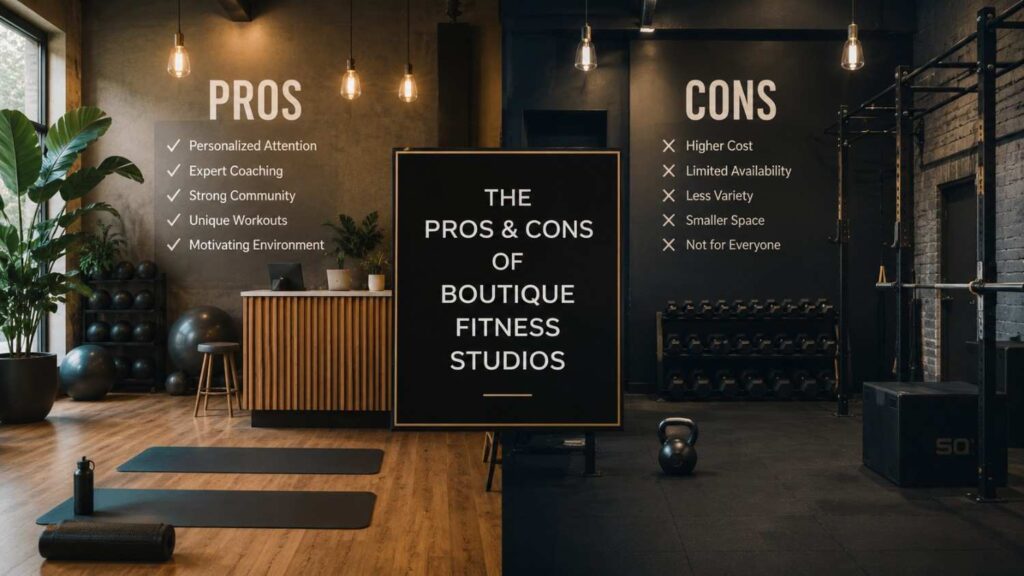
The Pros and Cons of Boutique Fitness Studios
Boutique fitness studios have changed the way many people think about exercise. Instead of walking into a large gym and creating your own workout plan, you join a focused class led by an instructor. These studios usually specialize in one or a few workout styles, such as Pilates, yoga, barre, indoor cycling, boxing, strength training, dance cardio, or HIIT. The experience is often more personal, more structured, and more community-driven than a standard gym membership.
The Pros and Cons of Boutique Fitness Studios are important to understand before signing up because the model is not right for everyone. Some people love the energy, coaching, and accountability that come with boutique workout classes. Others may find the cost, schedule, or limited equipment too restrictive. A studio may look attractive online, but the real question is whether it fits your body, your routine, your goals, and your budget.
A good fitness choice should help you stay consistent over time. Health organizations such as the CDC and WHO recommend regular physical activity for adults, including aerobic exercise and muscle-strengthening activity. This means the best fitness option is not always the trendiest one. It is the option you can follow safely and regularly. For some people, that is a boutique fitness studio. For others, it may be a traditional gym, home workouts, outdoor walking, or a mix of different options.
In this guide, we will look closely at the benefits, disadvantages, safety factors, costs, comparisons, and decision points related to boutique fitness studios. By the end, you should have a clear idea of whether this type of fitness experience is worth it for you.
What Is a Boutique Fitness Studio?
A boutique fitness studio is a smaller, specialized fitness space that usually focuses on a specific workout style or a carefully designed group training experience. Unlike large commercial gyms, boutique studios do not try to offer everything under one roof. Instead, they build their service around a clear training method, a strong brand identity, professional instruction, and a more personal member experience. This is one of the biggest reasons people are drawn to them.
The word “boutique” often suggests something smaller, more focused, and more curated. In fitness, that usually means fewer machines, smaller class sizes, set class times, and a more guided approach. A boutique gym may focus only on reformer Pilates, strength circuits, yoga, barre, spinning, boxing, or high-intensity interval training. Some studios combine several class types, but they still usually keep a clear identity and class structure.
For beginners, this can make exercise feel less confusing. You do not have to walk around a gym wondering what machine to use or how many sets to do. The class format gives you direction from start to finish. For experienced members, boutique fitness studios can offer a high-energy setting, better coaching cues, and a stronger sense of progress. However, because the model is more specialized, it is important to understand how these studios work before joining.
| Studio Type | Primary Focus | Best For | Typical Intensity |
|---|---|---|---|
| Pilates Studio | Core strength, posture, flexibility | Beginners, rehabilitation, core stability | Low to Moderate |
| Yoga Studio | Flexibility, mobility, mindfulness | Stress relief, recovery, balance | Low to Moderate |
| HIIT Studio | High-intensity interval training | Fat loss, cardiovascular fitness | High |
| Barre Studio | Small muscle movements, balance, endurance | Muscle toning, posture | Low to Moderate |
| Indoor Cycling Studio | Cardio endurance and leg strength | Heart health, calorie burn | Moderate to High |
| Strength Training Studio | Resistance exercises and progressive overload | Building muscle and strength | Moderate to High |
| Boxing Studio | Cardio, coordination, power | Fitness, stress relief, agility | High |
How Boutique Fitness Studios Work
Most boutique fitness studios operate through scheduled classes. Members book a class in advance, arrive at a specific time, follow an instructor, and complete a planned workout with a group. This structure is one of the main reasons people choose boutique workout classes. It removes much of the planning and decision-making that can make fitness feel overwhelming, especially for people who are new to exercise or returning after a long break.
Many studios use a class booking app or online system where members can reserve spots, join waitlists, manage memberships, and cancel classes. This creates a more organized experience, but it also means you need to plan ahead. Popular class times can fill up quickly, especially early mornings, evenings, and weekends. Some studios also have cancellation windows or no-show fees, which can be helpful for accountability but inconvenient if your schedule changes often.
During class, the instructor usually leads the warm-up, main workout, cool-down, and any needed movement adjustments. In smaller classes, instructors may offer form corrections and modifications for different levels. This gives the experience a more personal feel than many self-guided gym workouts. The quality of the instructor plays a major role in how safe, useful, and enjoyable the class feels.
Common Types of Boutique Workout Classes
Boutique workout classes come in many formats, and each one supports different fitness goals. A Pilates studio may focus on core control, posture, mobility, and low-impact strength. A yoga studio may focus on flexibility, balance, breathing, relaxation, and body awareness. A barre studio often blends ballet-inspired movements, light resistance, and high-repetition exercises to target muscular endurance and control.
HIIT studios are usually more intense. They focus on short bursts of hard effort followed by rest or lower-effort movement. These classes may include bodyweight exercises, weights, rowing machines, treadmills, or circuit stations. Indoor cycling studios focus on cardio endurance, music-led motivation, and group energy. Boxing and kickboxing studios may combine cardio, coordination, footwork, and strength-based movements.
Strength-focused boutique fitness studios are also becoming more common. These studios may use kettlebells, dumbbells, resistance bands, sleds, or functional training stations. The best class type depends on your fitness goals. If you want flexibility and stress relief, yoga may be a better match. If you want strength and muscle tone, Pilates or strength training may suit you more. If you want a fast-paced sweat session, HIIT or cycling may feel more exciting.
The Main Pros of Boutique Fitness Studios
The main benefits of boutique fitness studios are structure, coaching, motivation, and community. These are not small benefits. Many people struggle with fitness because they do not know what to do, how often to train, or how to stay consistent. Boutique studios try to solve these problems by giving members a clear plan, a set schedule, and a more guided workout experience. For people who need direction, this can make a big difference.
Another major benefit is the atmosphere. Boutique studios often invest heavily in lighting, music, branding, equipment layout, and instructor energy. This can make the workout feel less like a chore and more like an experience. While atmosphere alone does not create results, it can help people look forward to training. When exercise feels enjoyable, it becomes easier to repeat.
Boutique fitness studios can also create a stronger connection between instructors and members. In a large gym, you may come and go without speaking to anyone. In a smaller studio, instructors may learn your name, remember your goals, and notice your progress. This can create a sense of accountability that supports long-term consistency. For many members, the personal attention and group energy are the biggest reasons they continue attending.
Better Coaching and More Personal Attention
One of the strongest advantages of boutique fitness studios is access to instructor-led guidance. In a traditional gym, most members train on their own unless they pay extra for personal training. This can work well for people who already know how to build workouts, use equipment, and track progress. However, many beginners feel unsure about form, exercise selection, and workout structure. Boutique fitness classes can reduce that uncertainty.
In a well-run studio, the instructor explains each movement, demonstrates proper technique, and gives options for different fitness levels. Smaller group training also makes it easier for instructors to notice mistakes and offer corrections. For example, in a Pilates class, the instructor may adjust your body position to help you move with better control. In a strength class, they may correct your squat, hinge, or pressing form. These small adjustments can improve both safety and results.
This personal attention is not the same as one-on-one coaching, but it can still be valuable. It gives members more support than a fully self-guided workout while keeping the energy of a group class. For people who want structure without paying for private training, boutique fitness studios can offer a strong middle ground.
Strong Community and Motivation
Community is one of the main reasons people stay loyal to boutique fitness studios. When you attend the same class times regularly, you often start seeing familiar faces. Over time, this can create a sense of belonging. You may feel more motivated to show up because your instructor knows you, classmates recognize you, and the routine becomes part of your weekly lifestyle.
This kind of workout accountability can be powerful. Many people do not struggle because they dislike fitness completely. They struggle because it is easy to skip workouts when no one notices. In a boutique studio, the class booking system, instructor relationship, and group setting can all encourage consistency. Even simple things, such as a friendly greeting or a coach remembering your progress, can make the experience feel more personal.
Group fitness classes also bring shared energy. Music, coaching cues, and class momentum can help people push through moments when they might stop during a solo workout. This does not mean every class should be intense. It means the group environment can make effort feel more manageable and enjoyable. For many members, that emotional support is just as important as the workout itself.
The Main Cons of Boutique Fitness Studios
The Pros and Cons of Boutique Fitness Studios must be viewed honestly. While these studios can offer a high-quality experience, they are not perfect. Some people join because the studio looks modern, stylish, or popular, but later realize the schedule, cost, or training style does not fit their life. This is why it is important to look beyond the branding and understand the practical limitations.
The first concern is cost. Boutique fitness studios often charge more than traditional gyms because they provide instructor-led classes, smaller class sizes, specialized equipment, and a more curated experience. For some people, the extra cost is worth it because they attend regularly and get strong value from coaching and accountability. For others, the cost can become difficult to justify, especially if they miss classes or only attend occasionally.
The second concern is flexibility. Boutique studios usually run on fixed schedules. This works well for people with predictable routines, but it can be frustrating for people with changing work hours, family duties, travel, or unpredictable energy levels. Also, because many studios focus on one type of workout, you may need multiple memberships if you want a full fitness routine that includes strength, cardio, mobility, and recovery.
Higher Membership and Class Costs
Boutique fitness membership is often more expensive than a standard gym membership. This is one of the biggest disadvantages for many people. Instead of paying for general access to equipment, you are paying for coaching, class structure, studio atmosphere, specialized equipment, and a more personal experience. That can be valuable, but it also means you need to think carefully about how often you will actually attend.
For example, a membership may feel affordable when you imagine going four times per week. But if you only attend once a week, the cost per class becomes much higher. This is why I recommend calculating the real cost based on your likely attendance, not your ideal attendance. Be honest about your schedule, energy, commute, and current fitness habits before committing to a long-term package.
Some studios also charge extra for premium classes, private sessions, grip socks, equipment rentals, workshops, or late cancellations. These costs can add up. Before joining, read the membership terms carefully. Ask about cancellation rules, freeze options, renewal policies, and package expiry dates. A studio may be excellent, but the membership should still fit your budget comfortably.
Limited Schedule and Less Flexibility
Another common downside is the fixed class schedule. A traditional gym usually allows you to train whenever it is open. Boutique fitness studios, however, depend on class times. If your favorite class is only offered at 6 a.m. or 6 p.m., you may struggle to attend regularly. If classes fill quickly, you may also need to book days in advance.
This can be difficult for people with busy or unpredictable lives. Parents, shift workers, business owners, students, and people who travel often may find it hard to keep a consistent routine. Late-cancel policies can also create pressure. While these rules help studios manage class capacity, they may feel stressful if your schedule changes at the last minute.
Boutique studios may also offer limited training variety. A cycling studio may be great for cardio but may not give you enough strength training. A Pilates studio may improve control and mobility but may not fully meet your cardio goals. This does not mean the studio is bad. It simply means you may need to combine it with walking, strength training, or another form of exercise for a balanced routine.
Boutique Fitness Studio vs Traditional Gym
The comparison between a boutique fitness studio and a traditional gym is not about choosing one “better” option for everyone. It is about choosing the option that fits your behavior. A fitness plan only works when you can follow it consistently. Some people feel confident walking into a traditional gym and creating their own workout. Others feel more comfortable when an instructor tells them exactly what to do.
A boutique fitness studio is usually better for people who want structure, coaching, and a social environment. The experience is more guided, and the class format can make workouts feel easier to start. You do not have to plan sets, reps, exercise order, or timing. The instructor handles that for you. This can be helpful for beginners, people who get bored easily, and anyone who enjoys group energy.
A traditional gym is usually better for people who want flexibility, more equipment, and lower cost. You can train at your own pace, use different machines, lift weights, do cardio, stretch, and build your own routine. The trade-off is that you need more self-direction. If you do not know what to do, you may waste time or lose motivation. The right choice depends on your goals, confidence level, schedule, and budget.
Feature Comparison Table
| Feature | Boutique Fitness Studio | Traditional Gym |
|---|---|---|
| Training Style | Instructor-led and class-based | Mostly self-guided, with optional personal training |
| Cost | Usually higher per class or membership | Often lower monthly cost |
| Community | Strong group atmosphere and familiar members | Depends on gym culture and member behavior |
| Equipment Variety | Limited to the studio’s class type | Wider range of machines, weights, and cardio tools |
| Schedule | Fixed class times and booking required | More flexible access during opening hours |
| Coaching | Built into the class experience | Usually extra unless included |
| Best For | Motivation, structure, coaching, and accountability | Flexibility, solo workouts, equipment variety, and budget control |
| Possible Drawback | Less flexible and often more expensive | Less guidance and lower accountability |
This table shows the practical difference between the two options. Boutique fitness studios offer a more guided experience, while traditional gyms offer more independence. If you need support and motivation, the boutique model may feel better. If you prefer freedom and lower cost, a traditional gym may be the stronger option.
Which Option Is Better for Your Goals?
The best option depends on what you want to achieve and how you like to train. If your main goal is to build consistency, learn proper form, and stay motivated, a boutique fitness studio may be a strong choice. The class structure can help you avoid decision fatigue. You book the class, show up, and follow the coach. This simplicity can be very useful when you are trying to build a regular routine.
If your goal is heavy strength training, bodybuilding, or highly specific performance work, a traditional gym may offer more tools. You will usually have access to heavier weights, more machines, squat racks, benches, cables, and cardio equipment. This variety gives you more control over progressive training and program design.
Some people do best with a hybrid approach. For example, they may attend Pilates or yoga twice a week for mobility and control, then use a gym for strength training. Others may take HIIT classes for cardio and use walking for recovery. You do not have to choose only one model forever. The best routine is often the one that supports your goals while fitting naturally into your week.
Health, Safety, and Fitness Results
Boutique fitness studios can support better health, but results depend on more than attending classes. Your progress will be shaped by consistency, exercise selection, recovery, nutrition, sleep, and whether the class matches your current fitness level. A good studio should help you move better, train safely, and build confidence over time. It should not simply push you to exhaustion in every session.
Safety is especially important because boutique classes can be fast-paced and energetic. Some formats, such as HIIT, boxing, cycling, and heated classes, may feel intense. This can be motivating for some people, but it may also increase risk if movements are not explained properly or if members feel pressured to ignore discomfort. A professional studio should offer modifications, warm-ups, cool-downs, and clear coaching.
Fitness results also depend on balance. A complete routine usually includes cardiovascular exercise, strength training, flexibility, mobility, and recovery. Some boutique studios cover several of these areas, while others focus mainly on one. For example, a yoga studio may support mobility and stress relief but may not provide enough strength stimulus for every goal. A cycling studio may support cardio fitness but may need to be paired with strength training. Understanding this helps you choose wisely.
What Results Can You Expect?
The results you can expect from boutique fitness studios depend on the class type and your attendance. If you take strength-based classes consistently, you may notice better muscle tone, improved strength, and more confidence with resistance exercises. If you attend indoor cycling or HIIT classes, you may improve cardiovascular endurance and stamina. If you choose Pilates, yoga, or barre classes, you may notice better body control, posture, balance, flexibility, and core strength.
However, no studio can promise results without consistency. Attending one class every few weeks will not produce the same progress as a steady weekly routine. It is also important to match class intensity with your recovery. More is not always better. Beginners may start with two or three classes per week and build slowly as their body adapts.
A good boutique fitness studio should also teach you how to move with better awareness. This can be valuable beyond the class itself. Better form, stronger posture, and improved confidence can support daily movement, sports, work, and general well-being. The best results come when the studio supports both effort and education.
Safety Factors to Check First
Before joining any boutique fitness studio, check how the studio handles safety. One thing I always look for is whether instructors offer beginner-friendly modifications. A professional instructor should not expect every member to perform the same version of every exercise. People have different fitness levels, injury histories, mobility limits, and training backgrounds. Good coaching respects those differences.
Look for proper warm-ups, clear demonstrations, form cues, recovery periods, and cool-downs. In strength classes, instructors should explain how to lift safely and control movement. In HIIT classes, they should offer lower-impact options. In yoga or Pilates classes, they should guide alignment and avoid forcing people into positions their bodies are not ready for.
You should also pay attention to studio culture. A supportive studio encourages progress without shame. A risky studio may push members to ignore pain, compare themselves to others, or chase intensity at all costs. If you have a medical condition, injury, pregnancy-related concern, or long break from exercise, speak with a qualified health professional and tell the instructor before starting.
How to Choose the Right Boutique Fitness Studio
Choosing the right boutique fitness studio requires more than checking photos, reviews, or social media posts. A studio may look stylish, but it still needs to fit your goals, schedule, fitness level, and budget. The best choice should feel practical, safe, and motivating. It should support your lifestyle instead of making fitness feel harder to maintain.
Start by defining what you want from the studio. Do you want to build strength? Improve flexibility? Lose weight? Reduce stress? Train with others? Learn better form? Once your goal is clear, it becomes easier to choose the right class type. A person looking for stress relief may not need the same studio as someone looking for high-intensity conditioning. A beginner may need more coaching and modifications than an experienced athlete.
You should also test the experience before committing. Many studios offer trial classes, intro packages, or first-visit offers. Use that opportunity to check the instructor, environment, cleanliness, class size, music volume, equipment, and overall comfort. A good studio should make you feel challenged but not confused, welcomed but not pressured, and motivated without feeling judged.
| Decision Factor | Why It Matters | What to Look For |
|---|---|---|
| Membership Cost | Determines long-term affordability | Transparent pricing with no hidden fees |
| Class Schedule | Affects consistency | Multiple class times that fit your routine |
| Instructor Experience | Improves safety and learning | Certified instructors with relevant experience |
| Class Size | Influences personal attention | Small groups that allow form correction |
| Workout Style | Should match your goals | Pilates, yoga, HIIT, strength, cycling, or barre |
| Beginner Support | Makes learning easier | Intro classes and movement modifications |
| Studio Location | Impacts attendance | Close to home or work |
| Cancellation Policy | Prevents unexpected charges | Flexible cancellation and booking rules |
Step-by-Step Studio Selection Checklist
Start by identifying your main fitness goal. This may be strength, flexibility, weight management, cardio health, stress relief, improved posture, or general wellness. Once your goal is clear, match it with the right class format. Pilates may suit core strength and body control. Yoga may support flexibility and stress reduction. Strength classes may help with muscle and function. HIIT or cycling may support cardio fitness.
Next, check the studio schedule. Even the best studio will not help if the class times do not fit your life. Look at morning, evening, and weekend availability. Also check how early you need to book and whether your preferred classes often have waitlists.
Then review instructor quality. Look for clear communication, safe movement guidance, and options for different levels. Try a class before buying a large package. After class, ask yourself: Did I understand the instructions? Did the instructor pay attention to form? Did the workout match my level? Did I feel comfortable?
Finally, check the contract terms. Review cancellation rules, expiry dates, membership freezes, refund policies, and extra charges. This step can save you from frustration later.
Questions to Ask Before Joining
Before joining a boutique fitness studio, ask direct questions. Are the classes suitable for beginners? How many people are usually in each class? Do instructors correct form during the session? What happens if you miss a class? Are there late-cancel fees? Can you freeze your membership if needed? These questions help you understand both the workout and the business terms.
You should also ask about modifications. This is especially important if you have joint pain, back pain, past injuries, limited mobility, or low fitness confidence. A quality studio should be able to explain how they adjust exercises for different needs. If the answer is unclear, that may be a warning sign.
Another helpful question is: What results should I realistically expect from this class type? A trustworthy studio will give a balanced answer. They will not promise instant transformation. Instead, they will explain how regular attendance, proper form, recovery, and healthy habits support progress. Honest guidance is a strong sign of professionalism.
Are Boutique Fitness Studios Worth It?
The Pros and Cons of Boutique Fitness Studios become most important when deciding whether the cost is worth it. A boutique studio may be worth the investment if it helps you stay consistent, move safely, and enjoy your workouts. The value is not only in the class itself. It is also in the structure, coaching, accountability, and confidence you gain from the experience.
For some people, a lower-cost gym membership sounds better on paper but does not create results because they rarely use it. In that case, a more expensive studio that encourages regular attendance may offer better value. For others, a boutique fitness membership may be too costly or too limited. If you prefer training alone, using different equipment, or exercising at flexible times, a traditional gym or home workout plan may make more sense.
The key is to judge value based on use. Ask yourself how often you will attend, whether the class type supports your goals, and whether the studio improves your consistency. If the studio helps you build a routine you can follow for months, it may be a smart choice. If it creates pressure, financial stress, or scheduling problems, it may not be the right fit.
When a Boutique Studio Is a Good Choice
A boutique fitness studio is a good choice when you need structure and support. If you often skip workouts because you do not know what to do, the class format can help. You simply book a session and follow the instructor. This can reduce stress and make fitness feel more manageable. It is also useful for people who enjoy being coached and prefer not to train alone.
Boutique studios can also be a strong option if community motivates you. Some people work harder and stay more consistent when they feel connected to a group. Seeing familiar faces, joining regular classes, and building trust with instructors can turn fitness into a positive habit rather than a short-term task.
A studio may also be worth it if the class type matches your goals closely. For example, if you want better mobility and core control, a high-quality Pilates studio may offer better value than a general gym. If you love cycling and music-led cardio, an indoor cycling studio may help you stay committed. The best match is the one you will use consistently.
When You Should Avoid or Delay Joining
You may want to avoid or delay joining a boutique fitness studio if the cost creates stress. Fitness should support your well-being, not become a financial burden. If the membership fee is too high, consider trial classes, class packs, community programs, home workouts, or a lower-cost gym until your budget allows more flexibility.
You should also be careful if the studio culture does not feel supportive. A good fitness studio should welcome different body types, fitness levels, and goals. If the environment feels judgmental, overly competitive, or focused only on appearance, it may not be the right place for long-term health.
Delay joining if you are recovering from an injury and the studio cannot explain how they will modify exercises. Also be cautious if every class is very intense with little attention to recovery. Hard workouts can be useful, but they should be balanced with proper technique and rest. The right studio should help you train smarter, not just harder.
Quick Answer About The Pros and Cons of Boutique Fitness Studios
The Pros and Cons of Boutique Fitness Studios depend on your fitness goals, budget, schedule, and preferred workout style. Boutique studios often provide instructor-led classes, smaller groups, stronger community, and a more personal training experience than many traditional gyms. They can be helpful for people who need structure, motivation, and accountability. However, they can also be more expensive, less flexible, and limited in equipment or class variety. In my experience, boutique fitness studios work best for people who enjoy guided workouts and a strong class environment. They may not be the best choice for people who prefer low-cost, self-paced, or highly flexible training.
Frequently Asked Questions
Boutique fitness studios are popular, but many people still have questions before joining. This is normal because the experience, cost, and class structure can be very different from a traditional gym. The answers below cover the most common questions people ask when comparing fitness studio pros and cons. They are written to help beginners, returning exercisers, and regular gym-goers make a more confident decision.
What are the main benefits of boutique fitness studios?
The main benefits of boutique fitness studios include instructor-led classes, smaller group settings, better accountability, and a stronger sense of community. Many people like these studios because they provide structure and remove the need to plan workouts alone. They can also help beginners feel more confident because the instructor guides the class from start to finish.
What are the biggest disadvantages of boutique fitness studios?
The biggest disadvantages are higher costs, fixed class schedules, limited equipment, and less flexibility than traditional gyms. Some studios may also focus heavily on one type of workout, which may not cover all fitness needs. Before joining, it is smart to test a class, review the membership terms, and confirm that the schedule fits your routine.
Are boutique fitness studios good for beginners?
Yes, boutique fitness studios can be good for beginners if the classes are clearly taught and instructors offer modifications. Beginners should choose low-impact or beginner-friendly sessions first. It is also helpful to arrive early, speak with the instructor, and explain any injuries or concerns. A supportive studio will make new members feel comfortable, not embarrassed.
Is a boutique gym better than a regular gym?
A boutique gym is better if you want coaching, class structure, and group motivation. A regular gym may be better if you want flexible hours, more equipment, and a lower monthly cost. The best option depends on your personality, budget, fitness goals, and schedule. Some people get the best results by using both.
Why are boutique fitness studios so expensive?
Boutique fitness studios often cost more because they include professional instruction, smaller classes, specialized equipment, and a more personal member experience. You are not just paying for space. You are paying for coaching, class planning, atmosphere, and accountability. The cost may be worth it if you attend regularly and benefit from the support.
How many times a week should I go to a boutique fitness class?
Many people start with two or three boutique fitness classes per week. This gives the body time to adapt while still building consistency. The right number depends on the class intensity, your fitness level, and your recovery. If you do HIIT or strength classes, include rest days or lower-impact sessions such as yoga, Pilates, or walking.
Can boutique fitness studios help with weight loss?
Boutique fitness studios can support weight loss when combined with consistent activity, healthy eating, sleep, and recovery. Classes can help increase movement, build strength, and improve motivation. However, no class alone guarantees weight loss. The best results come from a realistic routine that you can maintain over time without burnout.
What should I check before buying a boutique fitness membership?
Before buying a membership, check the class schedule, instructor quality, cancellation policy, cost per class, beginner options, and membership terms. Try at least one class first. Also ask whether the studio offers modifications for injuries or different fitness levels. A good studio should feel professional, safe, welcoming, and realistic for your weekly routine.
Conclusion
The Pros and Cons of Boutique Fitness Studios show that these spaces can be a smart choice for the right person. They offer structure, coaching, motivation, and community. They can make fitness feel more personal and easier to follow, especially for people who do not enjoy planning workouts alone. A good studio can help you build confidence, improve consistency, and stay more connected to your fitness goals.
At the same time, boutique fitness studios are not perfect for everyone. They can be expensive, less flexible, and limited in training variety. Fixed class schedules may not work for people with unpredictable routines. Some studios may also be too intense or too specialized for certain fitness levels. That is why it is important to compare the full experience, not just the branding or class style.
Before joining, take time to define your goal, test a class, review the cost, and ask questions about instructor support. If the studio fits your budget, schedule, body, and motivation style, it may be a valuable part of your wellness routine. If not, a traditional gym, home program, or hybrid fitness plan may be better.